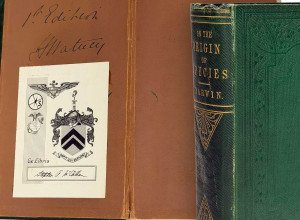
My bookplate is simple yet obscure. All the letters are essentially an autobiography of important events that occurred up to the time it was made. The symbols in the bottom corners represent some of my otorhinolaryngology research: the coiled one for the cochlea of the ear, and the upside-down V in the bottom right corner for the larynx and voice. The motto at the bottom that I adopted reflects many ways in which I have been useful in medicine, science, and the humanities.—Robert J. Ruben
Collectors Share Their Bookplates
For the summer 2026 issue, collectors shared the stories behind their bookplates




Courtesy David L. DiLaura
Collector David L. DiLaura's bookplate
In “The Bookplate: A Library’s Most Personal Touch” in the summer issue of Fine Books & Collections, Online Editor Alex Johnson explores how bookplates have evolved from simple statements of ownership to miniature artworks. For collectors who choose to have a bookplate, it’s an opportunity to express their passions and tastes. We asked a few to share their bookplates and the stories behind them:
I collected antiquarian books on optics, light, and vision for more than thirty-five years. For my bookplate [pictured above], I used Francois d’Aguilon’s Opticorum Libri Sex (1613). Its frontispiece and the vignettes that head each chapter were drawn by Peter Paul Rubens and engraved by Galle. I chose one that records the first experiment to measure light’s illuminating power.—David L. DiLaura
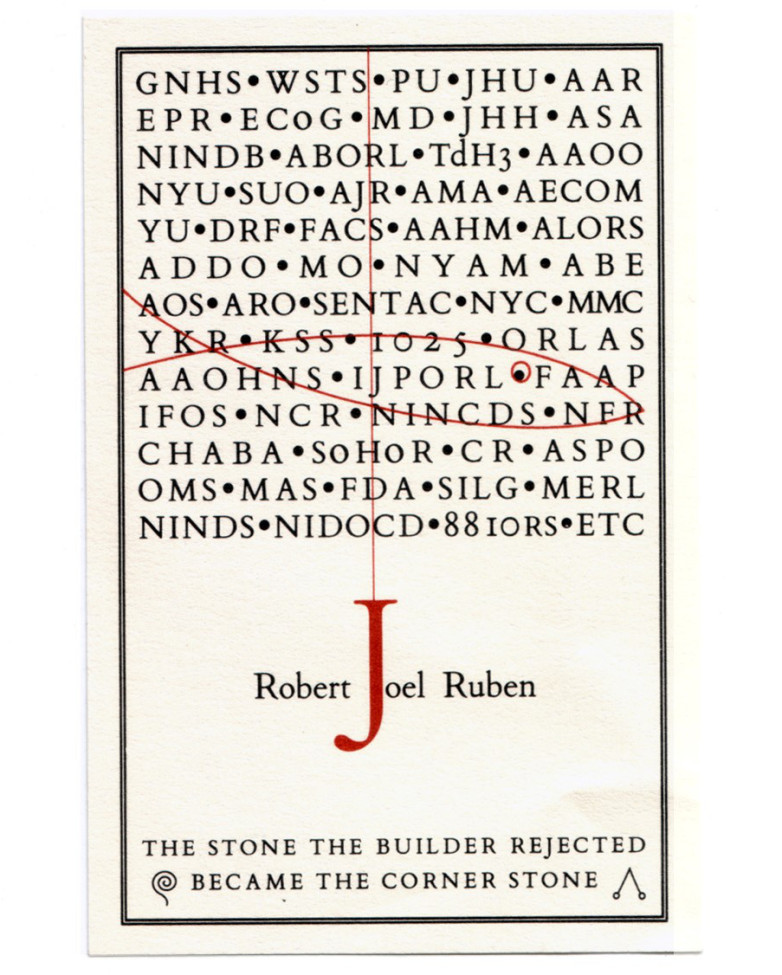
Courtesy Robert J. Ruben
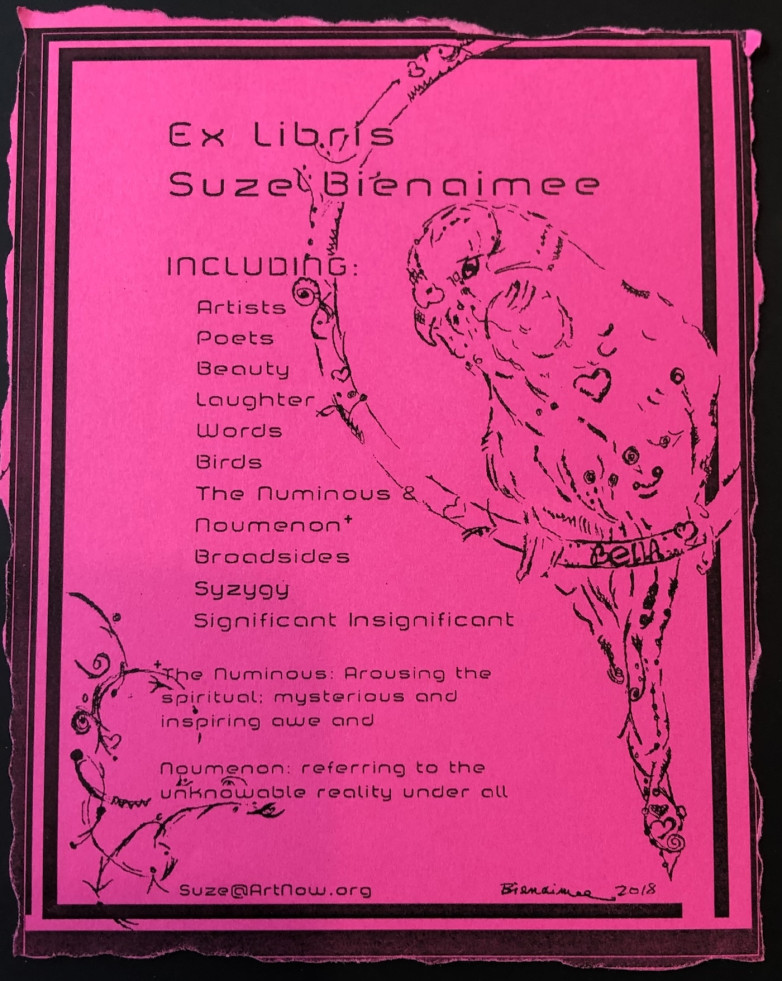
Courtesy Suze Bienaimee
As a collector and artist, it was natural for me to make my own bookplate. I had a lot of fun creating it as a memorial to my bird Bella, a little parakeet. She was quite remarkable in that she learned to identify colors, play basketball, and count numerically and randomly!
—Suze Bienaimee
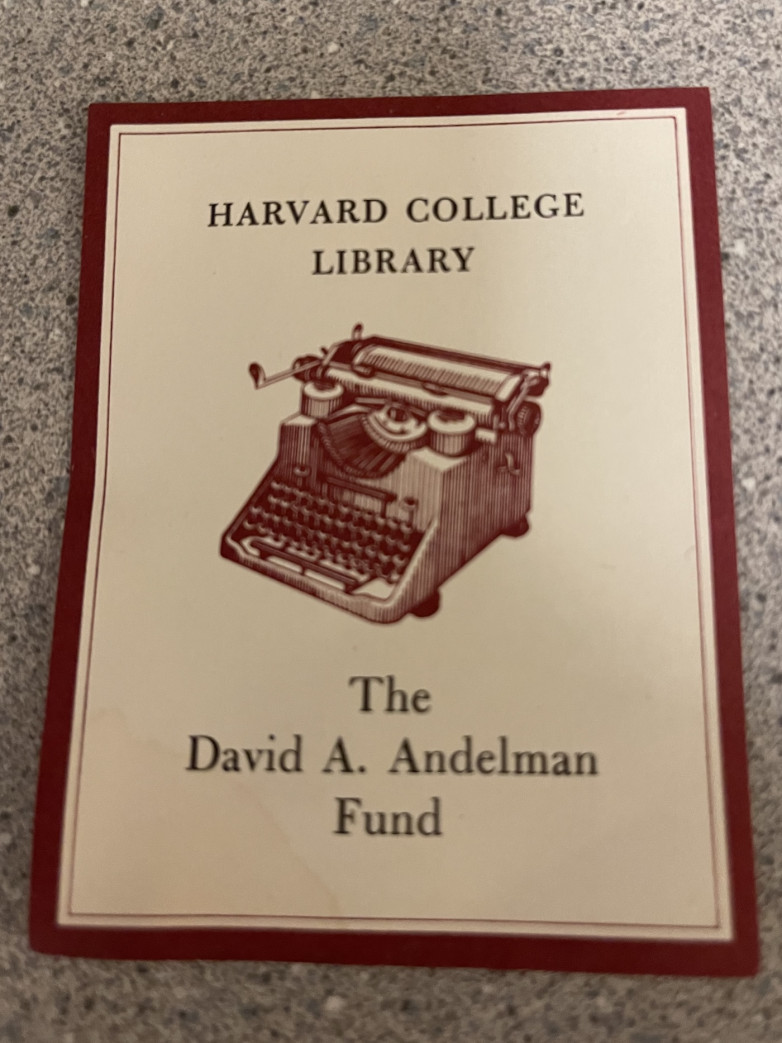
Courtesy David A. Andelman
This was created some years ago by the Harvard Library for all of the books purchased with the proceeds of the little fund I endowed there. I told them I was a writer and journalist; this is what they came up with. I love it. (And even have a typewriter like this, though I have not “created” on one in, well, decades! ...not even my Substack: Andelman Unleashed.)—David A. Andelman

Courtesy Arnold Hirshon
I am a collector of illustrated editions of the works of Lewis Carroll. (I am also the current president of the Lewis Carroll Society of North America.) A few years ago, my son Michael Hirshon, an illustrator, offered to create a bookplate for me as a gift. I was thrilled and asked for it to be of the White Knight from Looking-Glass (a character with whom I have often associated myself). Most importantly, I said I wanted it in his artistic style.—Arnold Hirshon
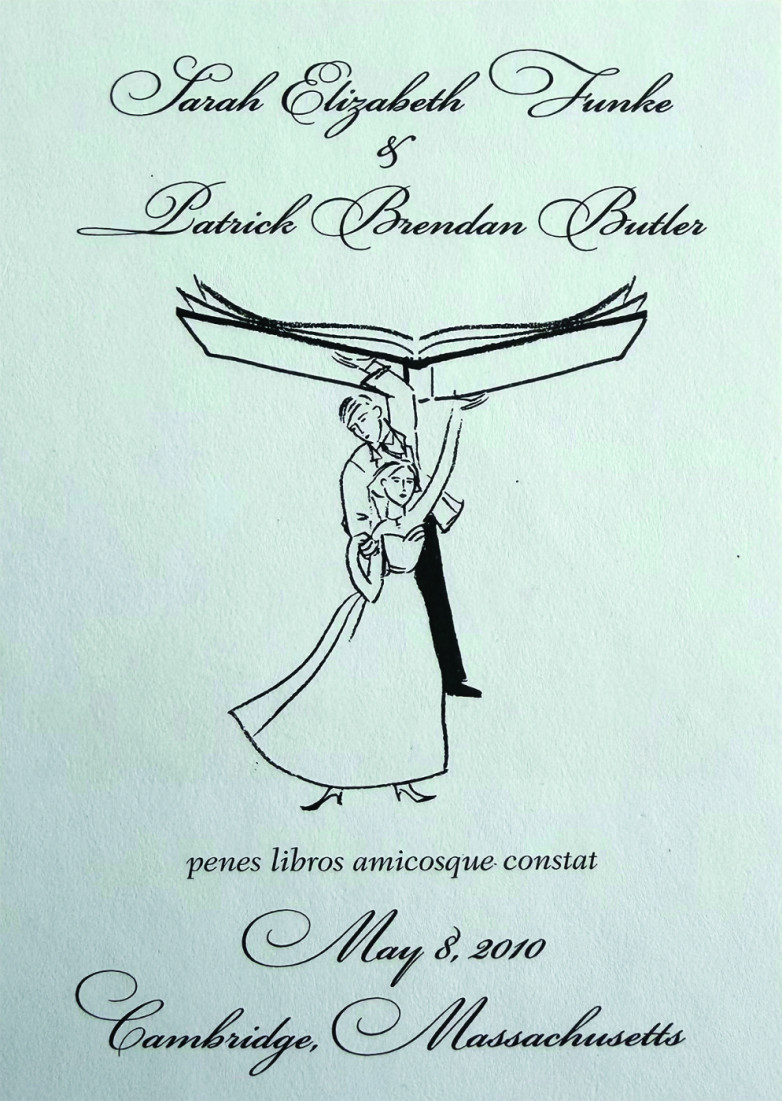
Courtesy Sarah Funke Butler
My friend designed a bookplate for our wedding. Family patiently helped affix it to the endpapers of the books we used as the centerpieces that were also wedding favors for our guests. The inscription reads, penes libros amicosque constat, it depends upon books and friends.—Sarah Funke Butler

Courtesy Reid Byers
My exhibition of Imaginary Books: Lost, Unfinished, and Fictive Works Found Only in Other Books proved very popular when displayed at the Grolier Club in New York and the Book Club of California in San Francisco. This collection of simulacra is equally well described as a collection of imaginary books or as a post-structuralist conceptual art installation, but in either case it needed its own bookplate.—Reid Byers
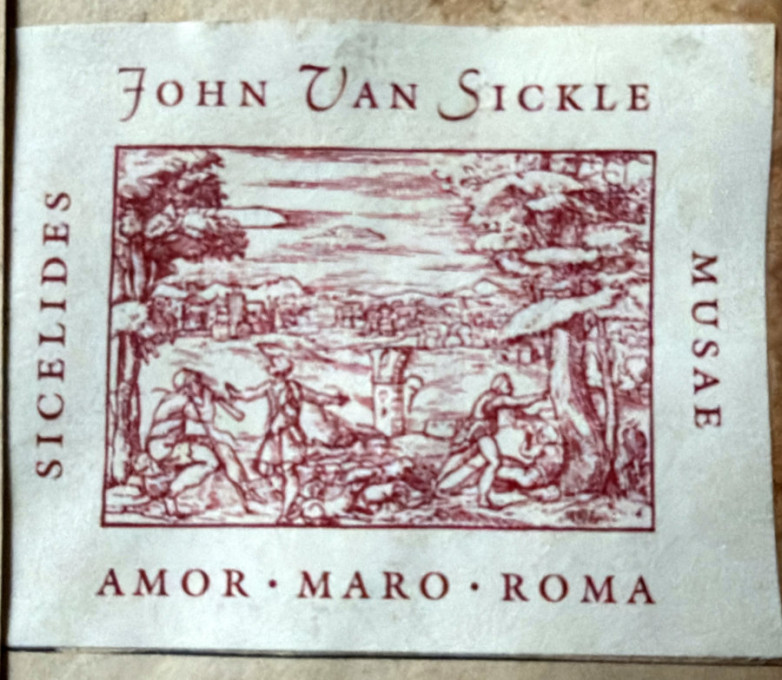
Courtesy John Van Sickle
At the suggestion of Fred Schreiber, I asked Abe Lerner to design for me an ex libris with my last name, Van Sickle, expressed in Greek as Sicelidas. “Sicelides Musae” opens the fourth eclogue of Virgil, to which I devoted my dissertation at Harvard, where Fred, too, earned a PhD in classical philology.—John Van Sickle
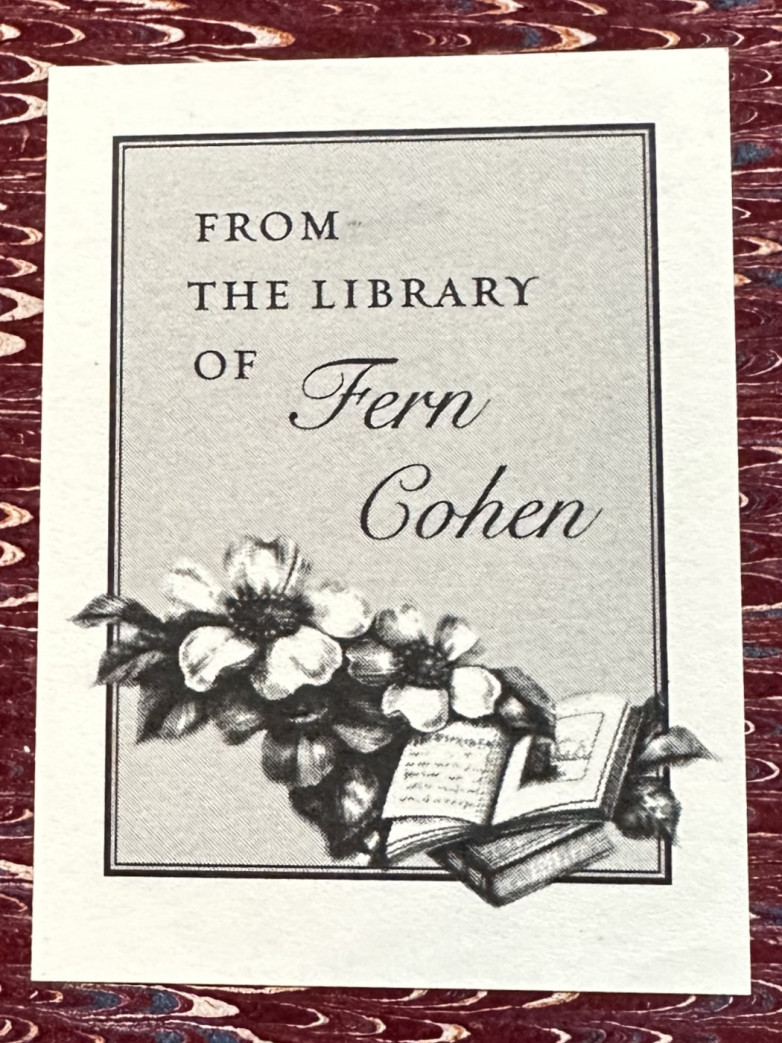
Courtesy Fern Cohen
I’m a botanical book collector so I wanted flowers and books on my bookplate. Book designer Jerry Kelly designed this from a motif on a Victorian bookplate I had collected.
—Fern Cohen
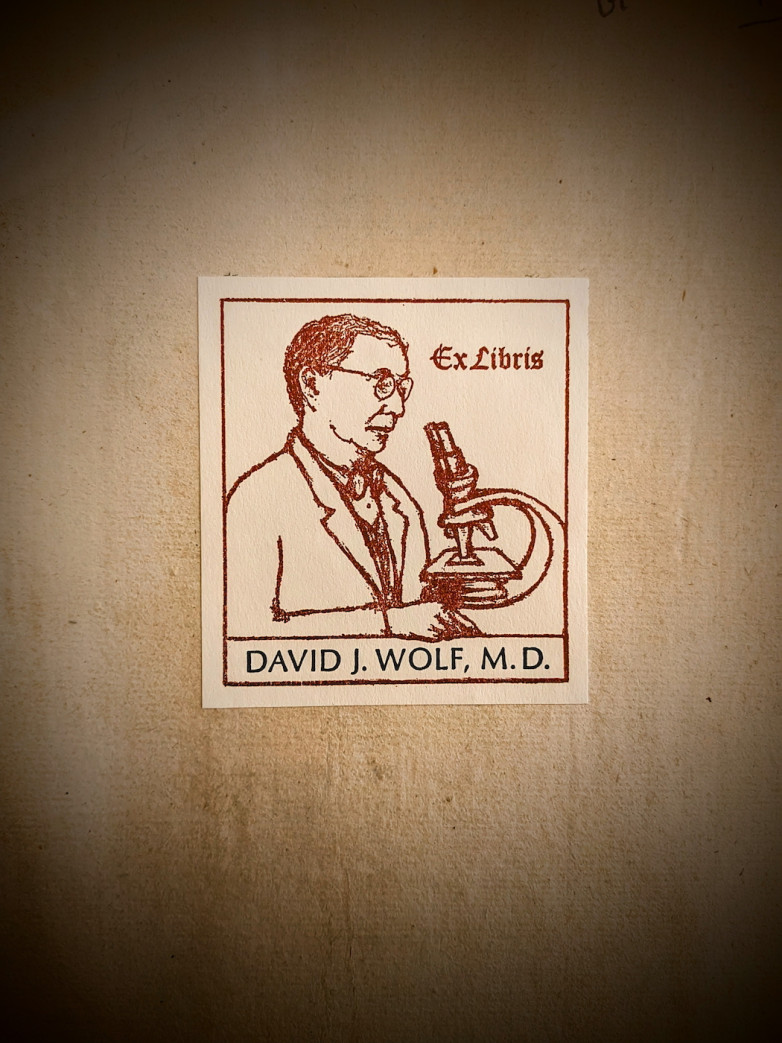
Courtesy David J. Wolf
After retiring as a clinical hematologist who used a microscope daily throughout my forty-year career and becoming a Grolier Club member, Bruce Chanler designed and printed this bookplate for my antiquarian medical book collection.—David J. Wolf