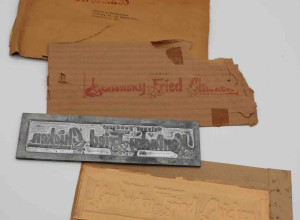



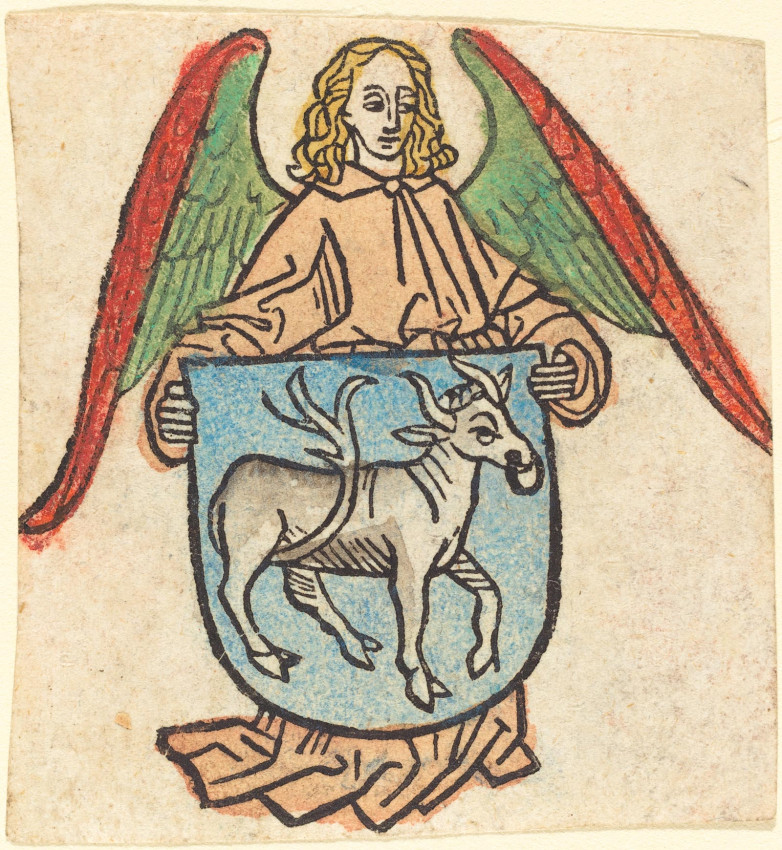
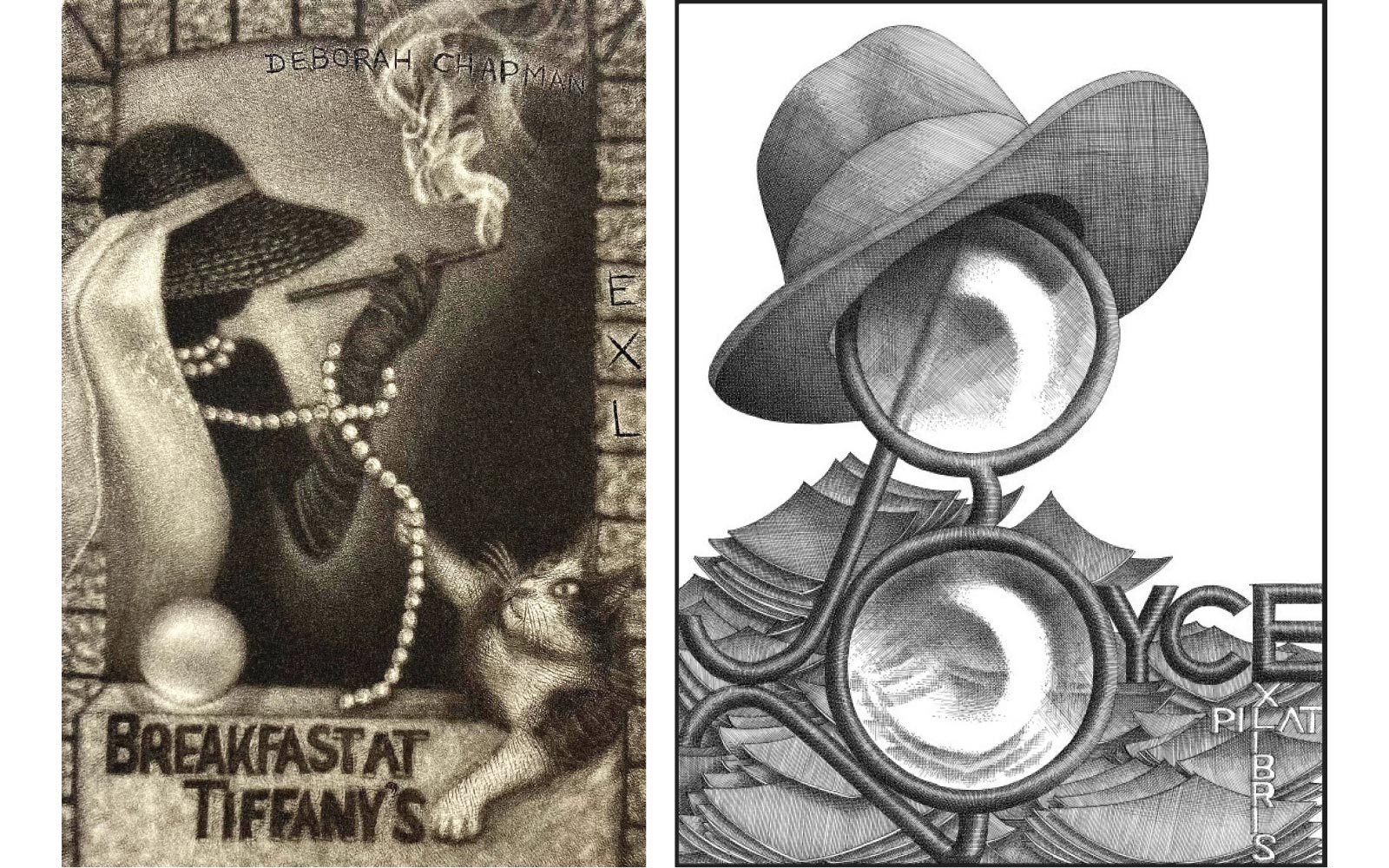
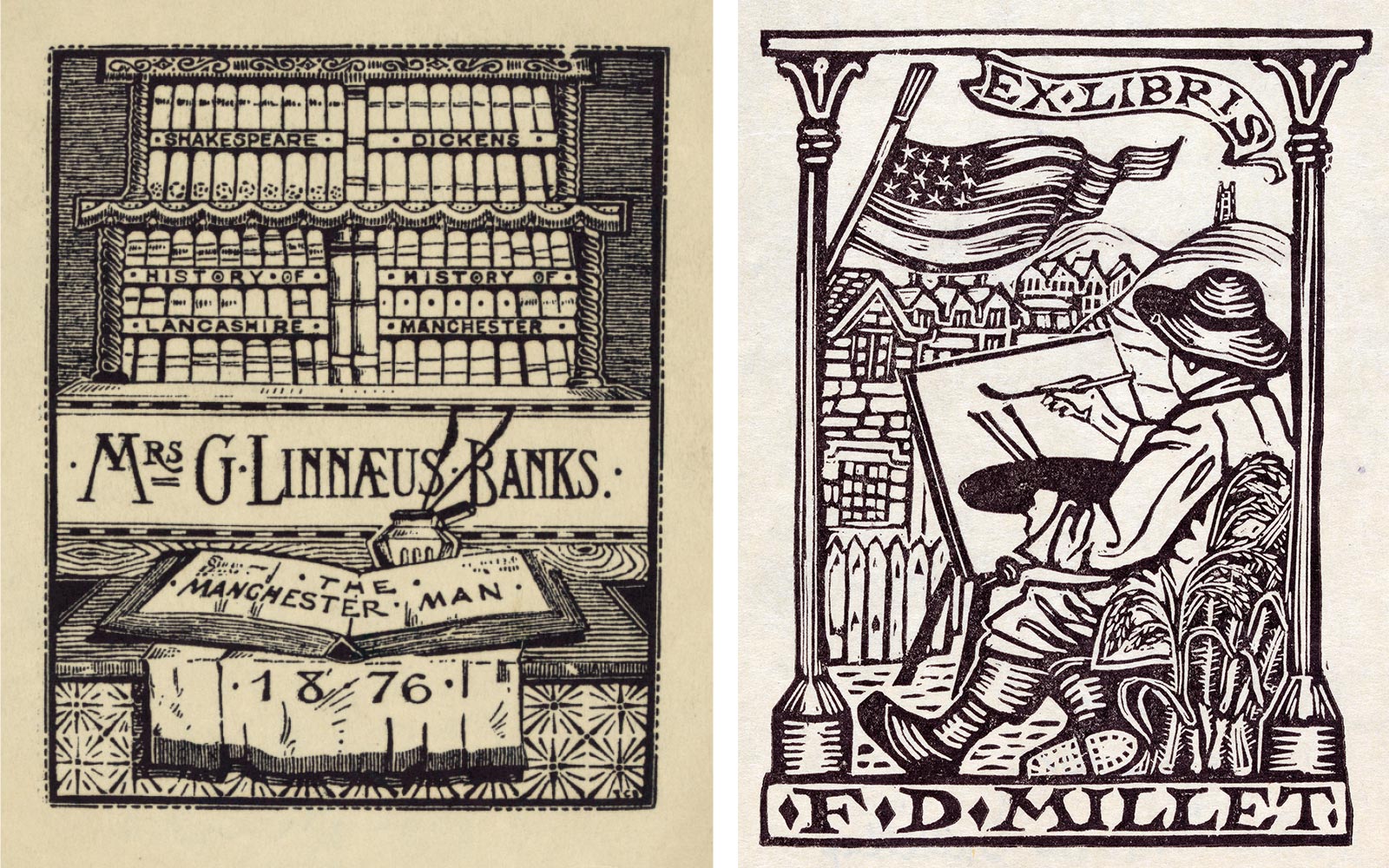
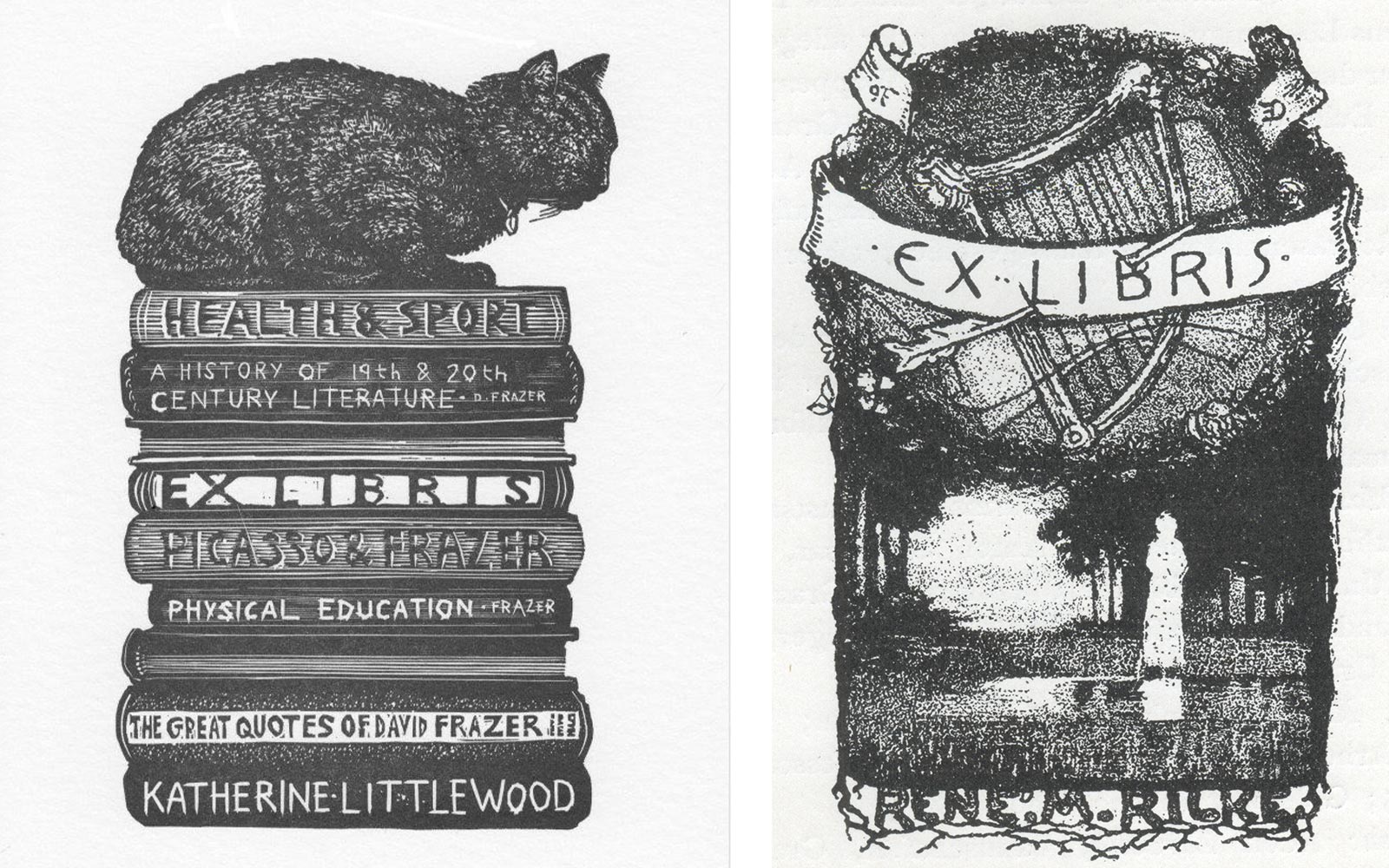
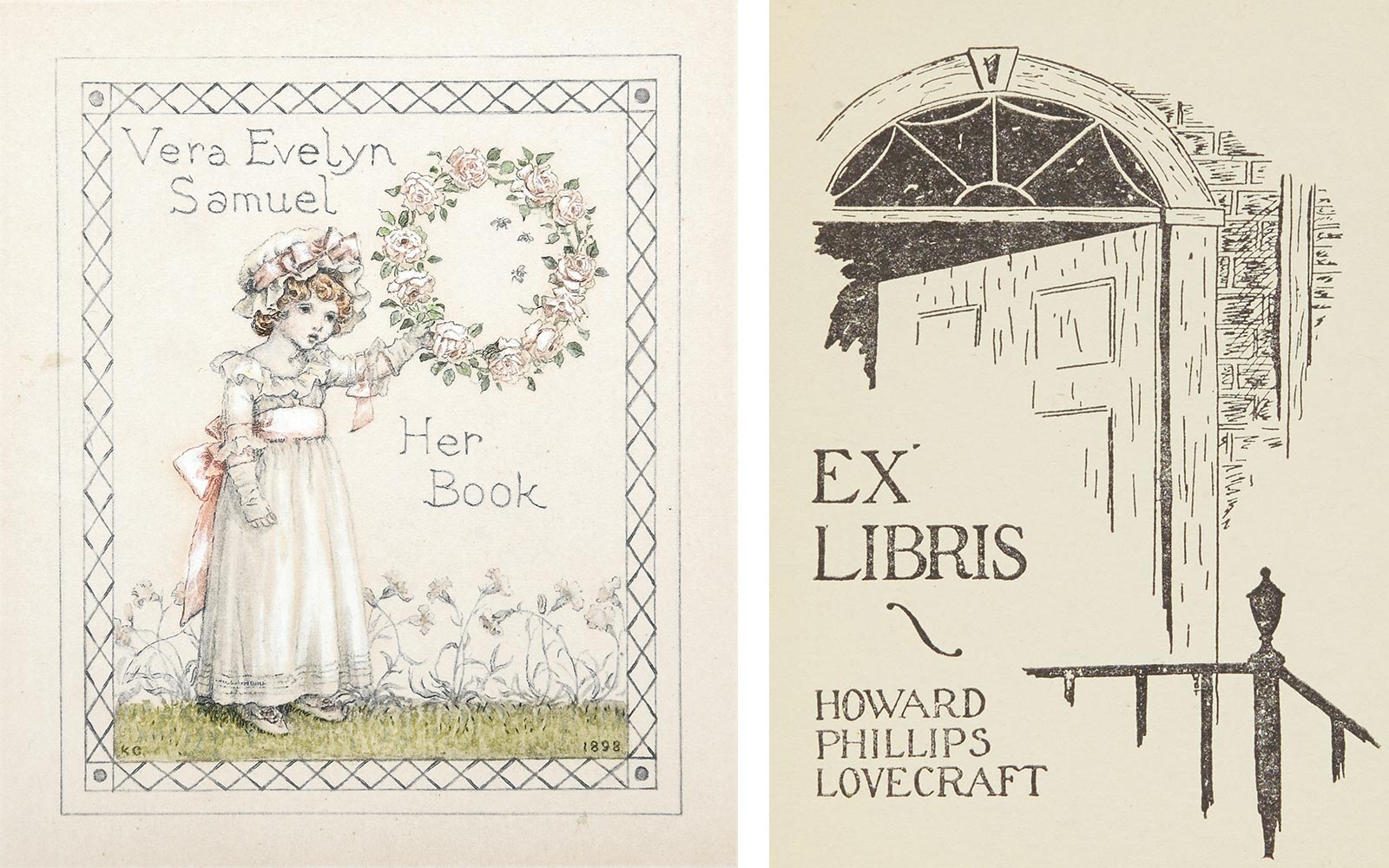
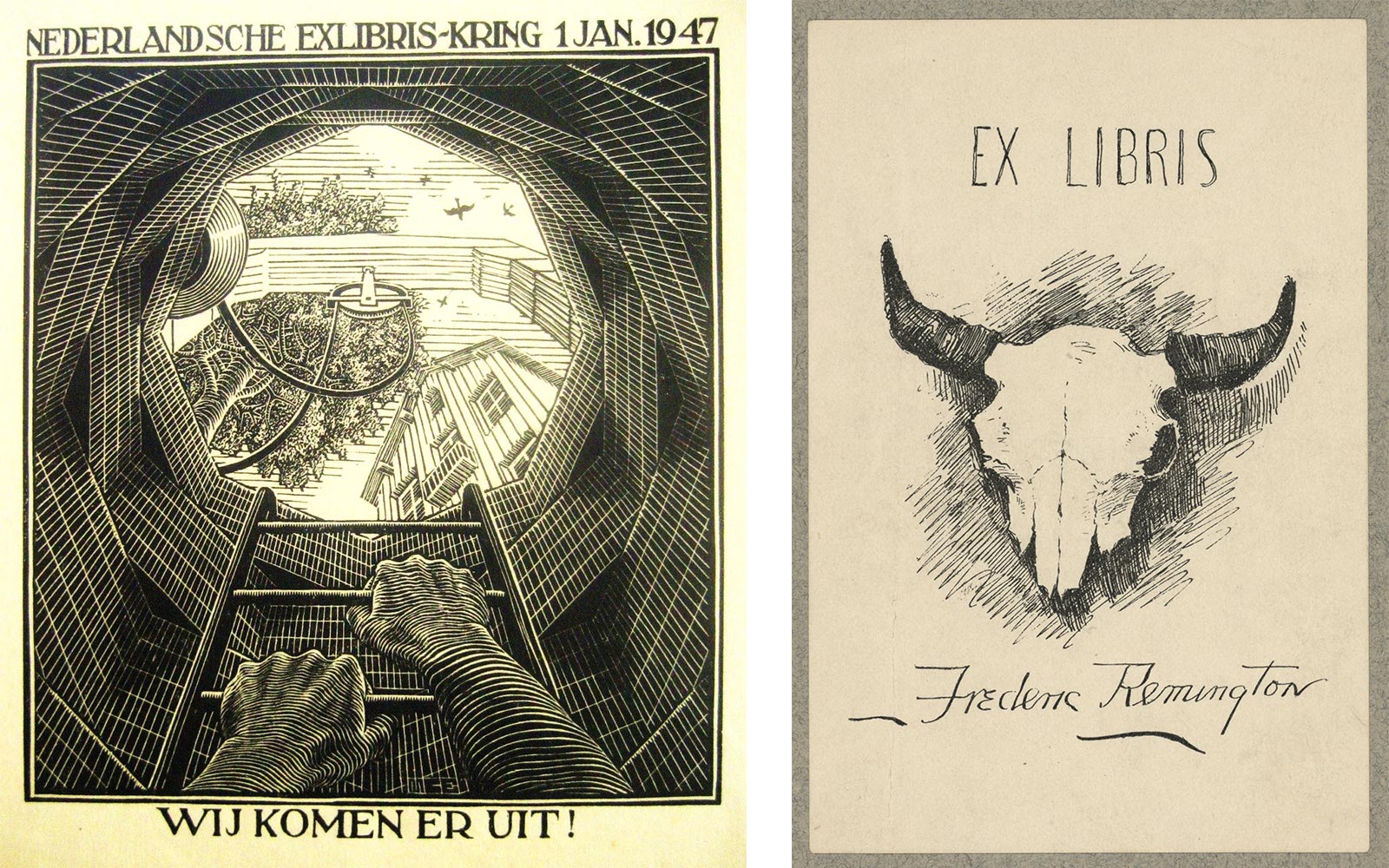
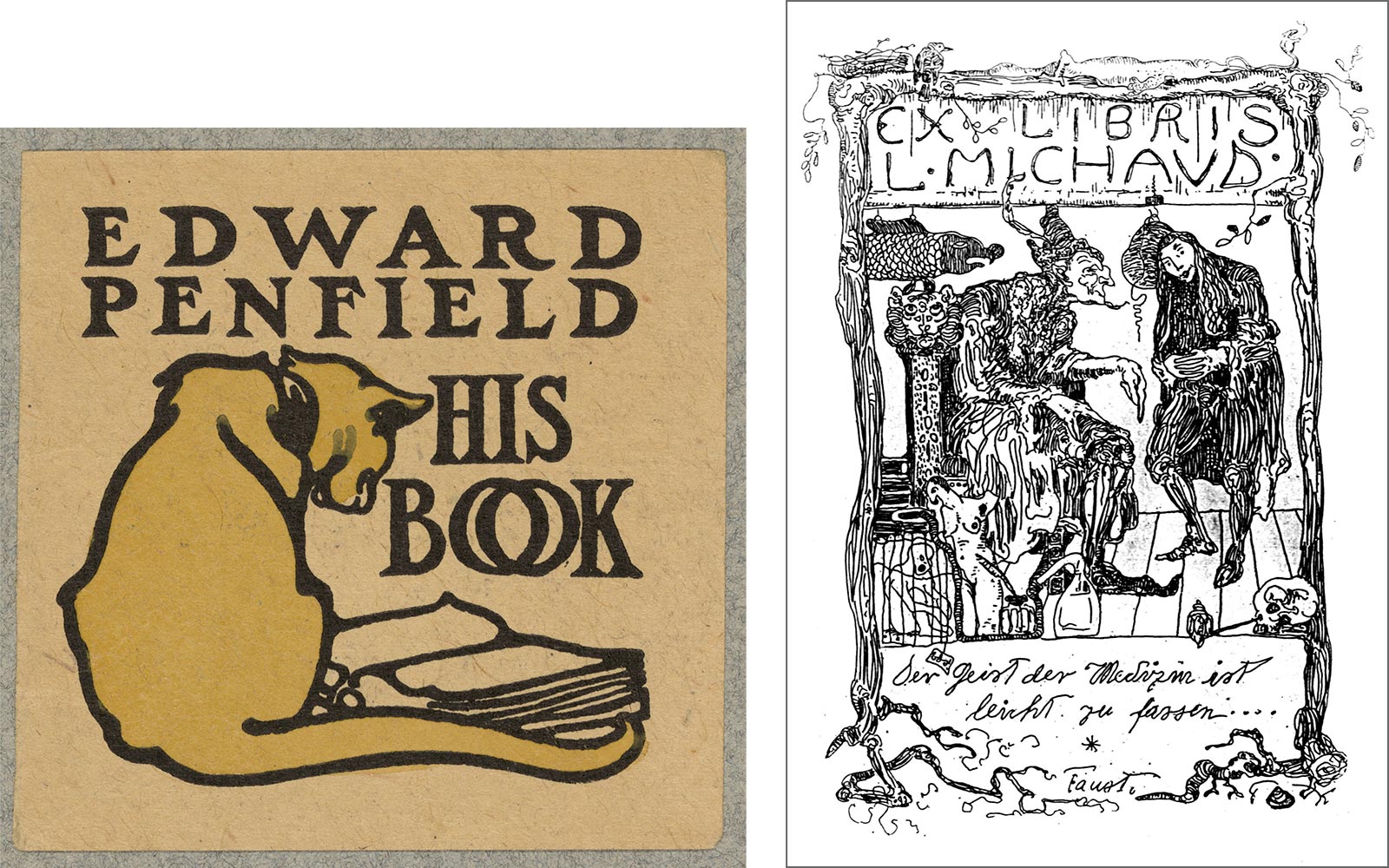
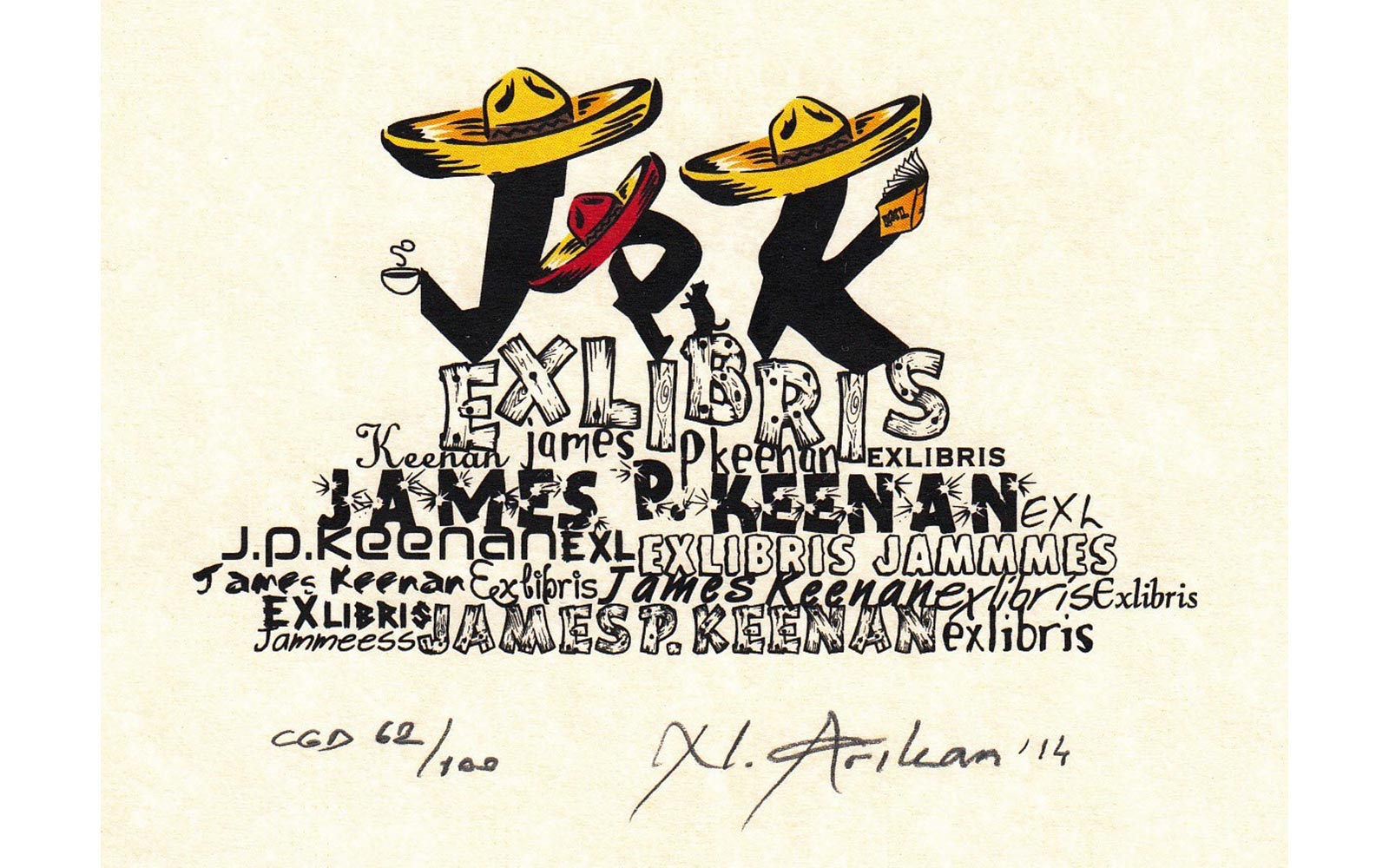
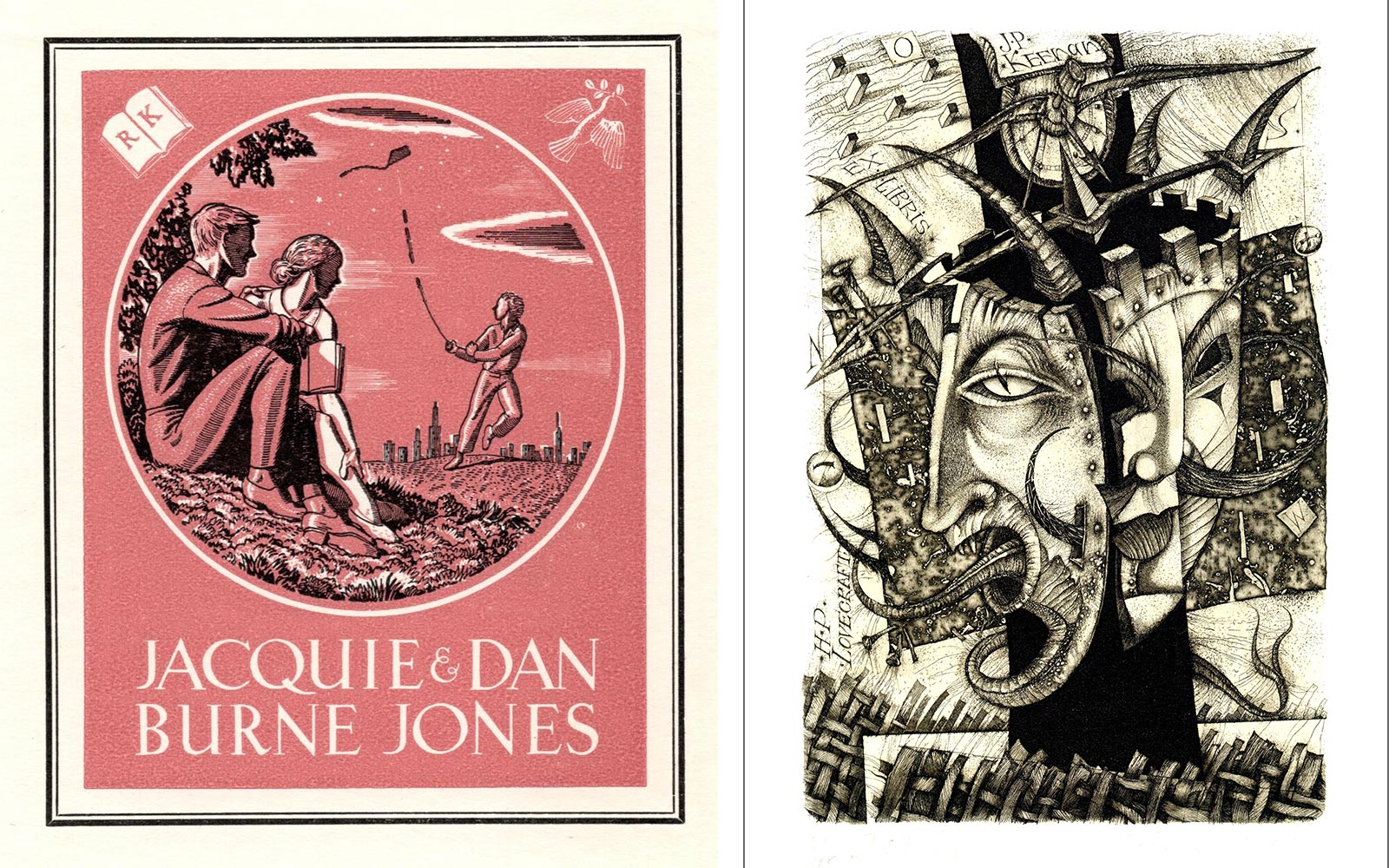
At the most basic level, bookplates show who owns/owned a book—a step up from the scribbled medieval curses that rained down destruction on anybody considering pinching a book. (“Though pleasingly there seems to be a resurgence of book curses on contemporary plates,” said Eleanor Baker, author of Book Curses.) That’s what makes them particularly useful for the rare book world, especially for establishing provenance.
Indeed, the identification of non-bookplate user Oscar Wilde’s personal library has been possible only because of the bookplates that other people stuck into the copies they bought at his bankruptcy auction. Oxford butcher Stanley Revell bought a large part of J. R. R. Tolkien’s library, to which he added a self-adhesive bookplate of his own design—“From the Library of J. R. R. Tolkien”—and which he sold to fund his collecting interest in the work of T. S. Eliot.
“Tracing provenance is an important aspect of my job,” said Sophie Floate, a rare books cataloguer for five University of Oxford colleges. “Bookplates are invaluable in this respect. That said, it can still be problematic tracing the actual person, since some bookplates are not very explicit in naming, such as cipher-style or monogram bookplates.”
Jane Austen scholars Deb Barnum of Bygone Books and Peter Sabor, professor emeritus at McGill University, have been using the bookplates in the library of the author’s brother, Edward Austen Knight, to track down volumes and create the marvelous Reading with Austen online catalogue (readingwithausten.com). You can virtually explore the library shelves as Jane would have done and read what she would have flicked through or borrowed when she paid her brother a visit.
“It is fascinating to find these books all over the world, most in the US, many in the UK, and others found in Australia and elsewhere,” said Barnum. “Sometimes, people email to say they have a book with the family bookplate; the most recent was a gentleman in Germany whose father collected books on Africa.”
Bookplates can even help open up previously closed avenues of research. “There have not been as many female book collectors as their male counterparts,” said Barnum. “The study of women owning books has of late taken on scholarly dimensions, and it is fascinating! Bookplates are a way to find this history—if a woman had a bookplate, she likely had a private library of some consequence.”