New Exhibition Focuses on Process of Creating Medieval Books
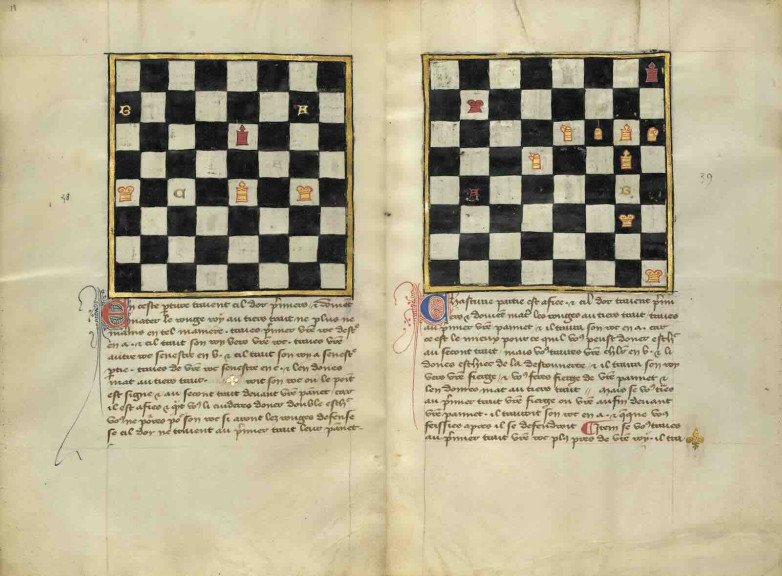
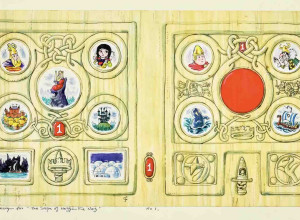
Two Chess Problems from Book of Chess Problems, late 1300s, French Tempera colors and gold leaf on parchment



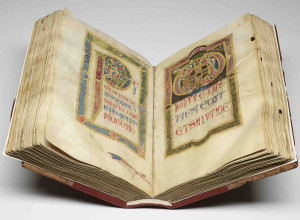
The Making of a Medieval Manuscript exhibition examining how medieval manuscripts were produced in Europe and the Mediterranean region opens at The J. Paul Getty Museum on August 4.
It will feature Christian manuscripts from Europe, Armenia, and Ethiopia, as well as objects of Jewish and Muslim origin.
“The works on view in this exhibition reflect the linguistic and cultural diversity represented in the Getty Museum’s collection of manuscripts,” said Timothy Potts, Maria Hummer-Tuttle and Robert Tuttle Director of the Getty Museum. "It explores the creation of medieval manuscripts from parchment making, writing, and illuminating to the final binding, and will include samples of the tools and materials used for each phase of production."
The manuscript-making process will be examined from start to finish, beginning with specially treated animal skins (parchment). Animal pelts, typically from calves, sheep or goats, were soaked in a caustic lime solution to loosen and remove fur, cleaned with water and stretched on a wooden frame, while a knife with a curved blade was used to scrape the surface until the desired thinness was achieved. An example of the lengths taken to smooth the parchment surface can be seen in a manuscript containing chess problems, a work written and painted on parchment made from calfskin where traces of hair follicles have been removed through laborious scraping and sanding.
After parchment was prepared, it was ruled with a stylus, a lead point or colored ink which helped scribes write evenly with quill pens made from goose or swan feathers. Featured in the exhibition is a French manuscript known as The Story of Two Lovers. The pages on display feature a layout with ruled horizontal lines of pink ink to guide the scribe. Spaces were marked for narrative illuminations, which were left unpainted on the page, and for painted decorations in the margins which have been filled with leaves of blue, green, red and yellow.
Manuscript painters (illuminators) were enlisted to enhance manuscript pages with colors and gold leaf. Gold was precious and was used judiciously, while colors were made from ground minerals, plants or insects, and chemically produced pigments. Also on show is the Rothschild Pentateuch, a richly illuminated Jewish manuscript containing the first five books of the Hebrew Bible. One of the pages on display is embellished with gold and silver leaf and painted with different pigments such as lead white, orange-hued lead red, organic pink, copper green and azurite blue.
After writing and illuminating were completed, parchment sheets were folded and nested together into gatherings and sewn together onto sewing supports. These supports were then threaded through wooden boards, which were cut to the size of the book and served as the front and back covers of the book. On display is a large Christian Bible bound with heavy wooden boards covered with leather. Metal corner pieces overlay pieces of colored parchment and two strong clasps keep the parchment folios flat.
The Making of a Medieval Manuscript is curated by Nancy Turner, conservator of manuscripts at the Getty Museum and is an expanded version of The Making of a Medieval Book exhibitions in 1998, 2000 and 2003. The exhibition runs through March 14, 2027, at the Getty Center in Los Angeles.