William Hogarth, Black Poetry, and the Harlem Renaissance lead Beinecke Exhibition Plans
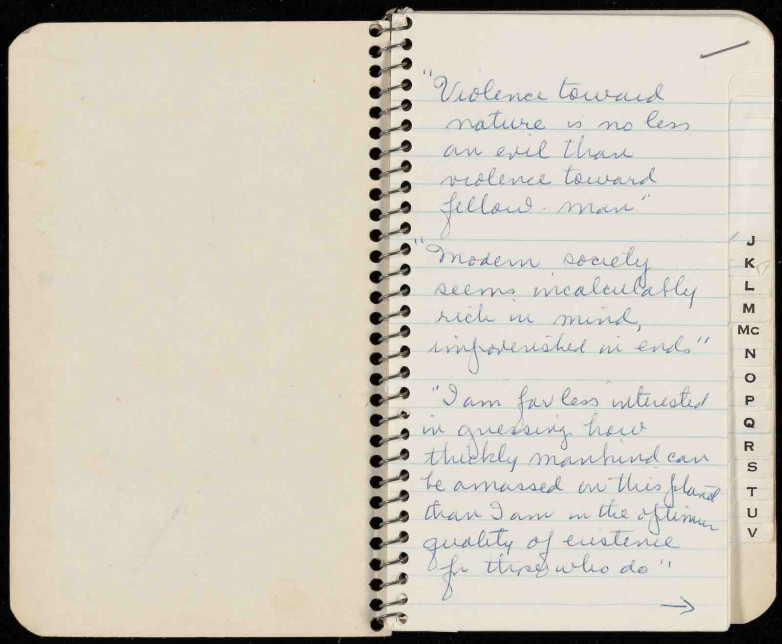
Notebook for Silent Spring



A series of free public exhibitions focusing on creative and intellectual expression in the literary arts and print culture has been announced by Yale's Beinecke Library.
The next upcoming display will be Silent Springs, Windswept Seas a focus on the work of enivronmentalist Rachel Carson (May 18–October 4) featuring previsously unseen and unpublished personal letters, photographs, notebooks, and handwritten manuscripts of her Sea Trilogy.
Autumn highlights include:
* Beauty Unadorned: ‘Fire!! ’ and the Harlem Renaissance
Running October 19–May 30, 2027, this will celebrate the centennial of the Harlem Renaissance experimental magazine Fire!!, the first and only issue of which appeared on November 15, 1926. The exhibition will showcase correspondence, early written drafts, photographs, and artworks from writers including Langston Hughes, Zora Neale Hurston, and Wallace Thurman.
* Cave Canem: A Home for Black Poetry
Also running on these dates will be Cave Canem: A Home for Black Poetry exploring the formation and impact of the groundbreaking poetry collective founded by poets Toi Derricotte and Cornelius Eady in 1996. It will draw on archival materials and poetry from the Cave Canem records and from the literary papers of the two founding poets, featuring manuscripts, correspondence, photographs, books, and poems.
* Satire, Sympathy, and Social Critique: William Hogarth's Progress Prints
A look at the power and ongoing relevance of the artist’s 'moral progress' prints, with six of them on show plus additional archival context on the artist’s commitment to social and political advocacy. Opens October 12 and runs through May 30, 2027.
* Paper Machines: Movable Books in Early Modern European Science
Running December 17, 2026 through August 15 , 2027, this will examine the history of movable books as a form of scientific communication and calculation in Europe, demonstrating how they developed as textual technologies and their uses shifted across the 15th through 18th centuries. The exhibition will feature 21 functional, and sometimes intricate, examples of historical paper instruments.