Rare Americana and Declaration of Independence Go On Show Today
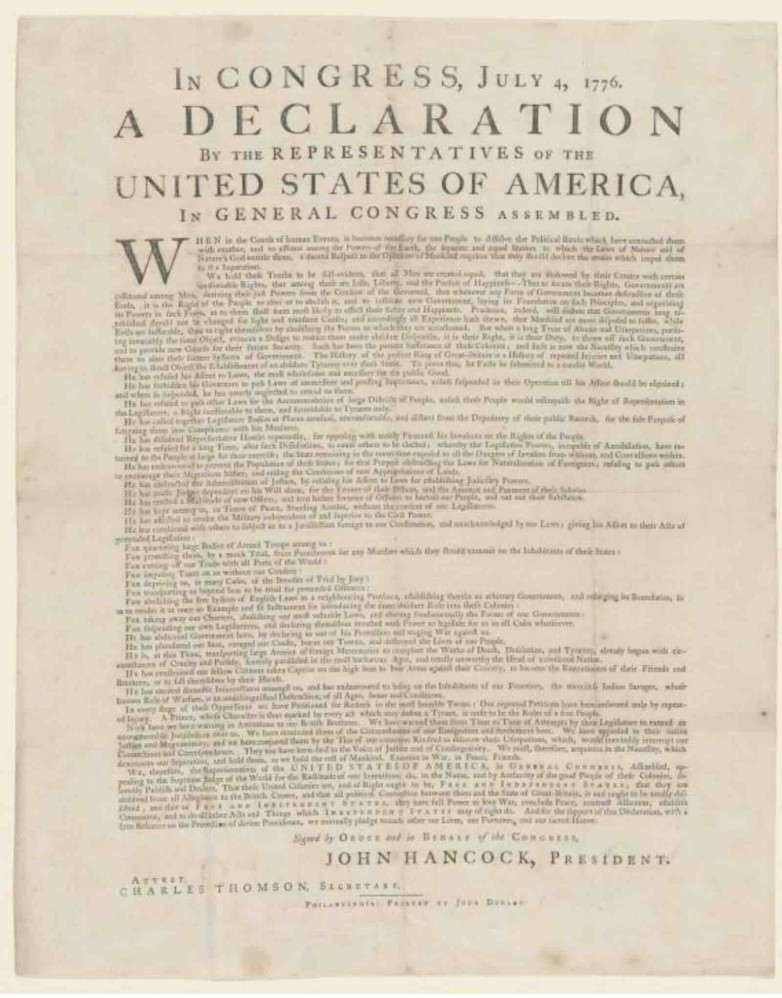
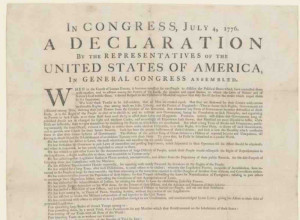
A declaration by the representatives of the United States of America: in general Congress assembled. Philadelphia: Printed by John Dunlap, 1776.



In honor of the 250th anniversary of the Declaration of Independence the Morgan Library & Museum is presenting a select group of important materials relating to the history of the founding of the nation through September 13.
The centerpiece of the installation is a rare copy of the Declaration of Independence. Known as the 'Dunlap broadside' this artifact of the nation’s founding was typeset by John Dunlap on the night of July 4, 1776 for distribution to “the several Assemblies, Conventions & Committees or Councils of Safety and to the several Commanding Officers of the Continental troops.” Among the rarest of the rare in this category, it is one of only 26 recorded copies surviving today.
As a foundational document the Morgan exhibition puts it in context with other important works from the United States including Thomas Paine’s radical polemic Common Sense published earlier that year which gave the nation’s founders a solid rationale for a break from monarchical rule based on the principles of reason.
Also included is correspondence from key figures of the Revolutionary period. A letter dated June 29, 1776, from Patrick Henry, written upon his appointment as Governor of Virginia, reveals the combined sense of humility and anxiety he felt regarding his ability to lead the infant commonwealth through the war effort to combat the “Tyranny of the British King”.
Another letter from Martha Washington to her sister Anna Maria 'Nancy' Dandridge Bassett, dated August 28, 1776, shows us a window into life on the home front, as she reports on the massive troop movements through Philadelphia toward New York.
The installation also features a life mask of George Washington. In 1785, the French sculptor Jean Antoine Houdon (1741-1828) visited Washington at his Mount Vernon residence. To make a mold of the future first president’s visage, Houdon had Washington lie down and then applied a protective layer of grease followed by a layer of plaster. Once hardened, the mold was removed, and plaster was poured into it to make this positive cast. Houdon brought this 'life mask' with him to France and apparently used it while working on the marble statue of Washington for the Virginia State Capitol.