In defence of visibly used books Wins Bodleian Book Collecting Prize




This year’s Colin Franklin Prize for Book Collecting offered by the Bodleian Library’s Centre for the Study of the Book has been won by Hannah Wei.
The annual prize is awarded to an undergraduate or postgraduate student of the University of Oxford or Oxford Brookes University for a collection of books or other printed materials, with £600 going to the winner plus £300 for a book to be purchased for the Bodleian Library’s collections selected by the winner in co-operation with the Bodleian’s Curator of Rare Books.
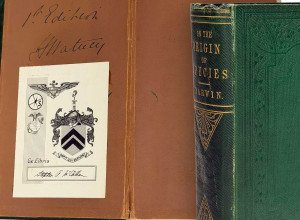
"My collection is titled “Traces of its action in the world”: In Defence of Visibly Used Books," explained Hannah who studies at Hertford College. "The quote is by Katherine O’Brien O’Keefe who argues that we should look at books as objects with their own histories, rather than simply abstract texts as so many literary scholars do. As the title suggests, it’s a collection of annotated secondhand books from the last century. My collection goes against the mainstream opinion of treating marginalia as a negative, and celebrates its presence instead as something which can bring joy as well as acting as records of a book’s history."
She added that the inspiration for her collection came from her love of reading books with annotations inside, especially heavily marked-up copies of textbooks and other popular student material founed in libraries.
"I loved being able to get a headstart on an essay or find some helpful notes in the margins of a text. I felt like I was able to participate in a lively scholarly discussion even when in actuality I was just reading by myself in an empty library, often late at night. At the same time, I was working on my material text paper for my course in which we would often look at marginalia and scribal/reader additions to manuscripts.
"In the world of medieval manuscripts, marginalia is celebrated and valued, but modern-day marginalia is maligned and considered a ‘defacement’. Annotated books are always sold as ‘poor’ quality volumes online. The sharp contrast between the way two types of marginalia are treated intrigued me and the prize gave me the perfect opportunity to explore this."