
Mail Art Didn’t End with the Digital Age

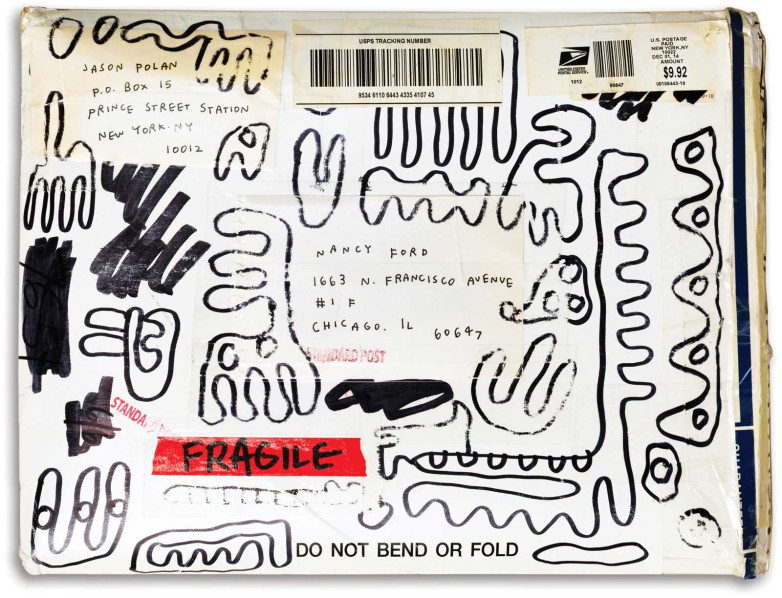
Courtesy Artbook | D.A.P.

The new publication Jason Polan: The Post Office gathers together mail art exchanged by the late artist.

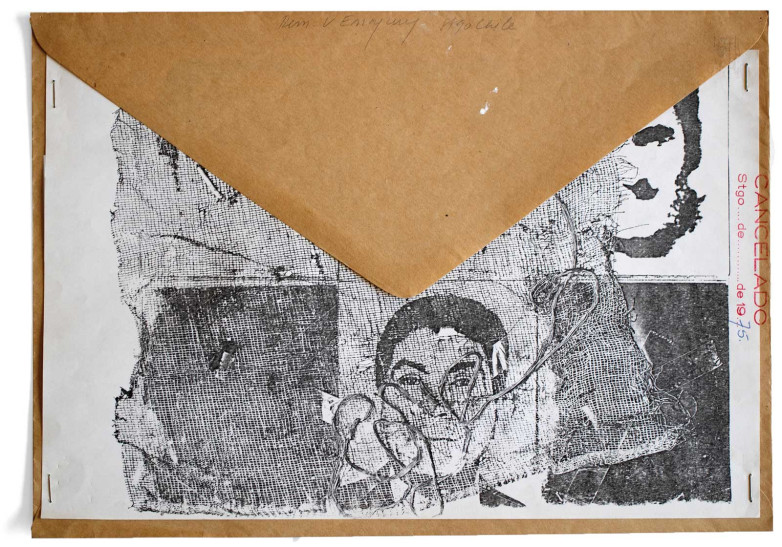
© Virginia Errázuriz

Virginia Errázuriz’s “Untitled” (c. 1979), from the series Cancelados, is one of the works featured in Transgresoras.

As long as humans employ courier services, from pigeons to state-maintained networks, artists harness these systems for their work. The earliest piece of mail art may be lost to history (some argue Cleopatra’s ingenious rug delivery to the Roman emperor was the genesis; others wait for Ray Johnson and a group of 1960s late-modernists to establish the “New York Correspondence School” with self-aware intention). Still, recent exhibitions, new publications, and collections remind us that mail can be utilized for unexpected creative ends.

While visual artists long dashed off a sketch on a letter, it wasn’t until the early twentieth century that anti-establishment artists intentionally incorporated mail into a practice, such as Duchamp’s nonsensical postcards and Kurt Schwitters’s use of discarded envelopes and postage stamps in collages. With these precedents, artists in the 1960s built an international mail art network and what became known as the Mail Art Movement. 
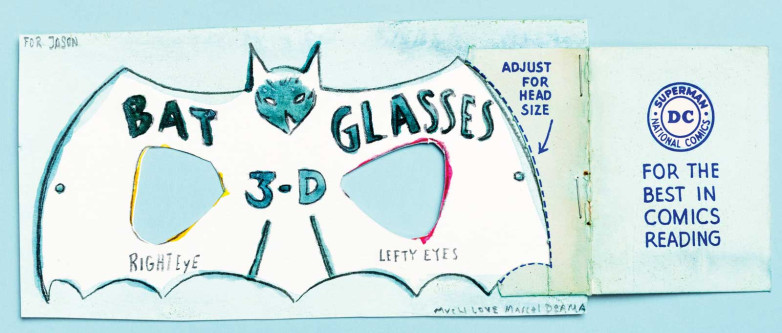
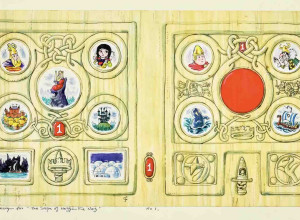
Courtesy Artbook | D.A.P.

Marcel Dzama was one of the artists with whom Polan had an active creative correspondence.

Mail art as an accessible practice is also reflected in Jason Polan: The Post Office, published by Printed Matter, Inc. this past fall. The book brings together work created by, and sent to, Polan from the mid-’90s to his premature death at thirty-seven in early 2020. Its editor, Jason Fulford, who met Polan via snail mail in 2006, discovered a box of this work while assisting in archiving the late artist’s papers. “It may have been in contention to be thrown out,” he recalled. “[It] was just things that he had received … there was a sensibility throughout a lot of this correspondence that started to be definable in a way that I think was kind of a portrait of Jason.” Fulford contacted the senders to see if they had saved work sent by Polan. Naturally, many items soon arrived by mail at Fulford’s studio to be photographed for the book. “A lot of people who knew his name probably thought of him as the giraffe guy or the [drawing] every person [in New York] guy … The mail shows how much broader his interests were.”

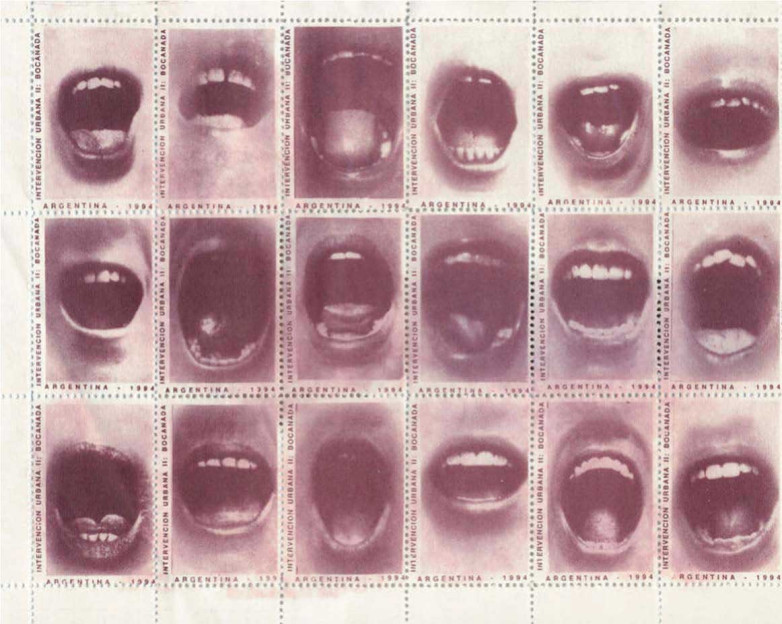
Courtesy Getty Research Institute, © Graciela Sacco Estate

Some artists have experimented with their own stamps, like Graciela Sacco’s “Urban Intervention No. 2” (1993), from the series Bocanada, included in Transgresoras.

Transgresoras: Mail Art and Messages, 1960s–2020s is on view through February 15, 2026, at the California Museum of Photography at the University of California, Riverside. Co-curated by Zanna Gilbert, senior research specialist at the Getty Research Institute, and Elena Shtromberg, professor of art history at the University of Utah, it examines how mail art has allowed Latinx and Latin American women artists to share their work and ideas, build international relationships, evade censorship, and confront restrictive systems, from gender expectations to repressive regimes. The work also hijacks a state system—the postal service—to challenge, question, and transgress government oppression. Shtromberg observed, “Artists at this time were very anti-commodification. … [Mail art] broadened the audience without being inside the gallery, inside an institution. And it allowed them to do what they wanted. You could send whatever you wanted to whoever you wanted. And so that kind of freedom, I think, modeled what artists hoped would be a more democratic approach to art making and, by extension, speech.”  

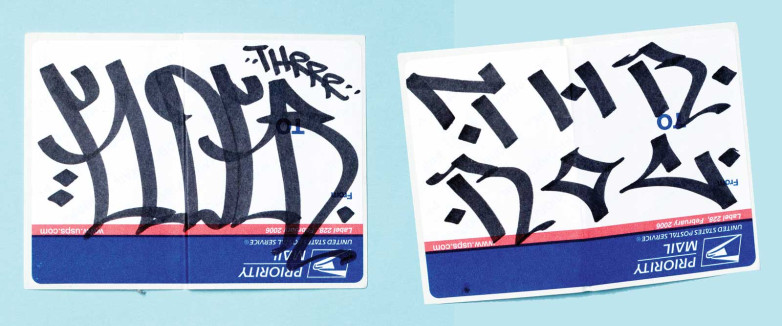
Courtesy Artbook | D.A.P.

Jason Polan and the artists in his network often used postal labels as canvases. 

The visual language of the postal system is an element still ripe for experimentation, with artists creating their own stamps, personas, and countries. Institutions have focused on this breadth in their collections, such as the Oberlin College Mail Art Collection, which houses over 20,000 pieces by over 1,800 artists from seventy countries. Their mixed media includes dried squid, shoes, industrial tomato cans, license plates, and foam bricks, all sent through the mail.

“Making mail art usually takes into account the fact that it’s traveling and its travel is part of its meaning,” said Gilbert, who co-curated Transgresoras. And for all of these pieces, the art is in sending the unexpected across town or around the world.