New Exhibition Examines Readers' Personal Interactions with Books of Hours
Walters Art Museum
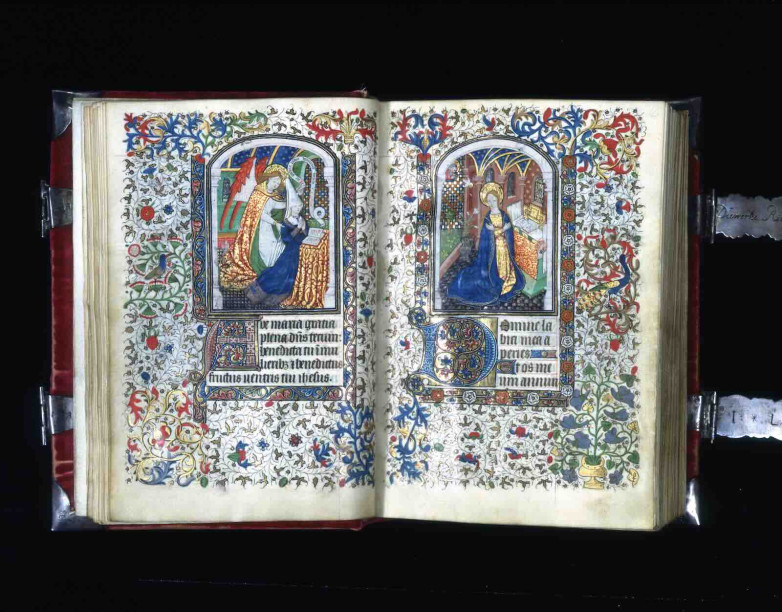
The Annunciation Featuring the Book’s Female Patron, Book of Hours, Belgium (Hainaut), ca. 1450‒1460. Ink, paint, and gold on parchment.
A new manuscript exhibition exploring how books of hours personally engaged users has opened at The Walters Art Museum in Baltimore.
Curated from the Walters’ collection of rare books and manuscripts, Medieval Mindscapes features 22 works and is on view through August 23, 2026.
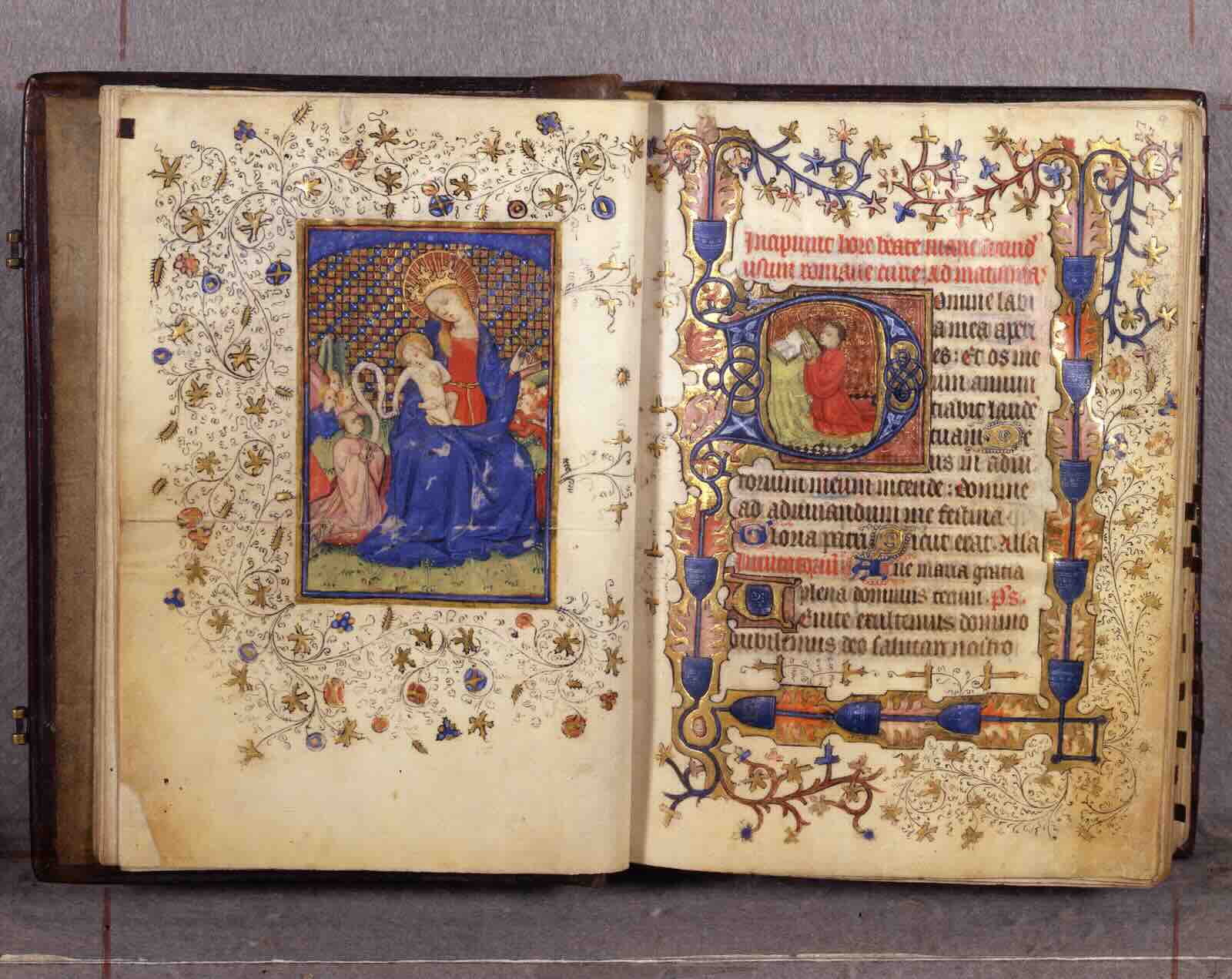
Books of hours helped those that used them to build a private devotional world by encouraging imaginative interaction with the scenes depicted in their personalized, portable manuscripts. Some books were embedded with custom portraits of their owners to encourage the user to picture themselves in the moments included, while others used visual illusions in the margins to help the user discern the interplay between their physical reality and the spiritual world.
“These books were crafted to really involve their owners in handling them and thinking about their imagery. It wasn’t passive looking, it was an active process,” said Lauren Maceross, Zanvyl Krieger Curatorial Fellow, Rare Books and Manuscripts. “This exhibition puts an emphasis on the way books of hours engaged users’ imaginations."
Works on view include three 15th century books of hours from Belgium. The first depicts the female patron who commissioned and owned it in an image of the Annunciation, where an angel announced to the Virgin Mary that she would miraculously give birth to the son of God. In the scene, the owner has cast herself as the main character with clothing and posture that suggest she is aspiring to follow Mary’s virtuous example, which may also suggest her hope for fertility.
1/5
Walters Art Museum
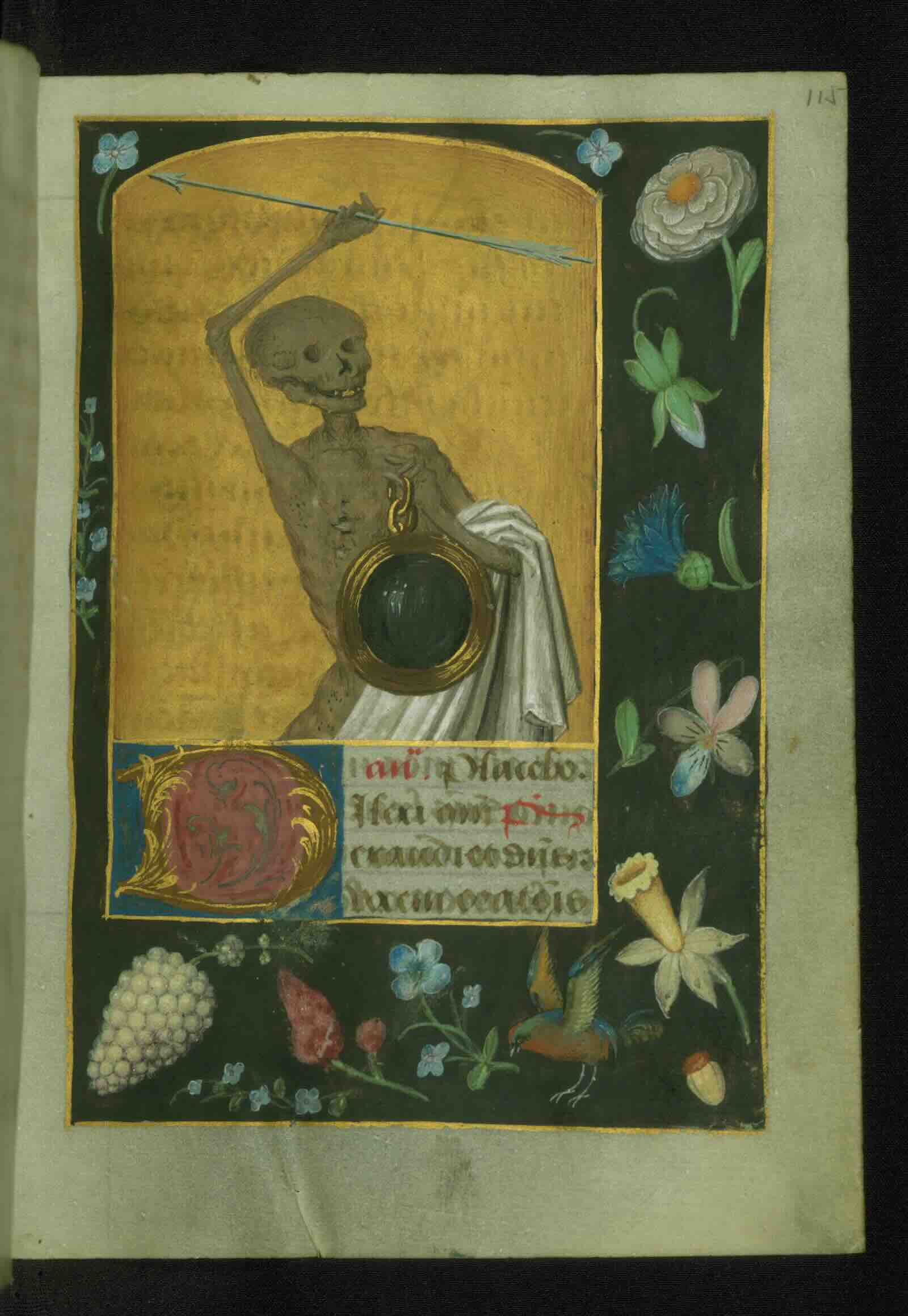
Death Holding an Arrow and Mirror, Book of Hours, Belgium (Flanders, Mons region), ca. 1490–1500. Ink, paint, and gold on parchment.
2/5
Walters Art Museum
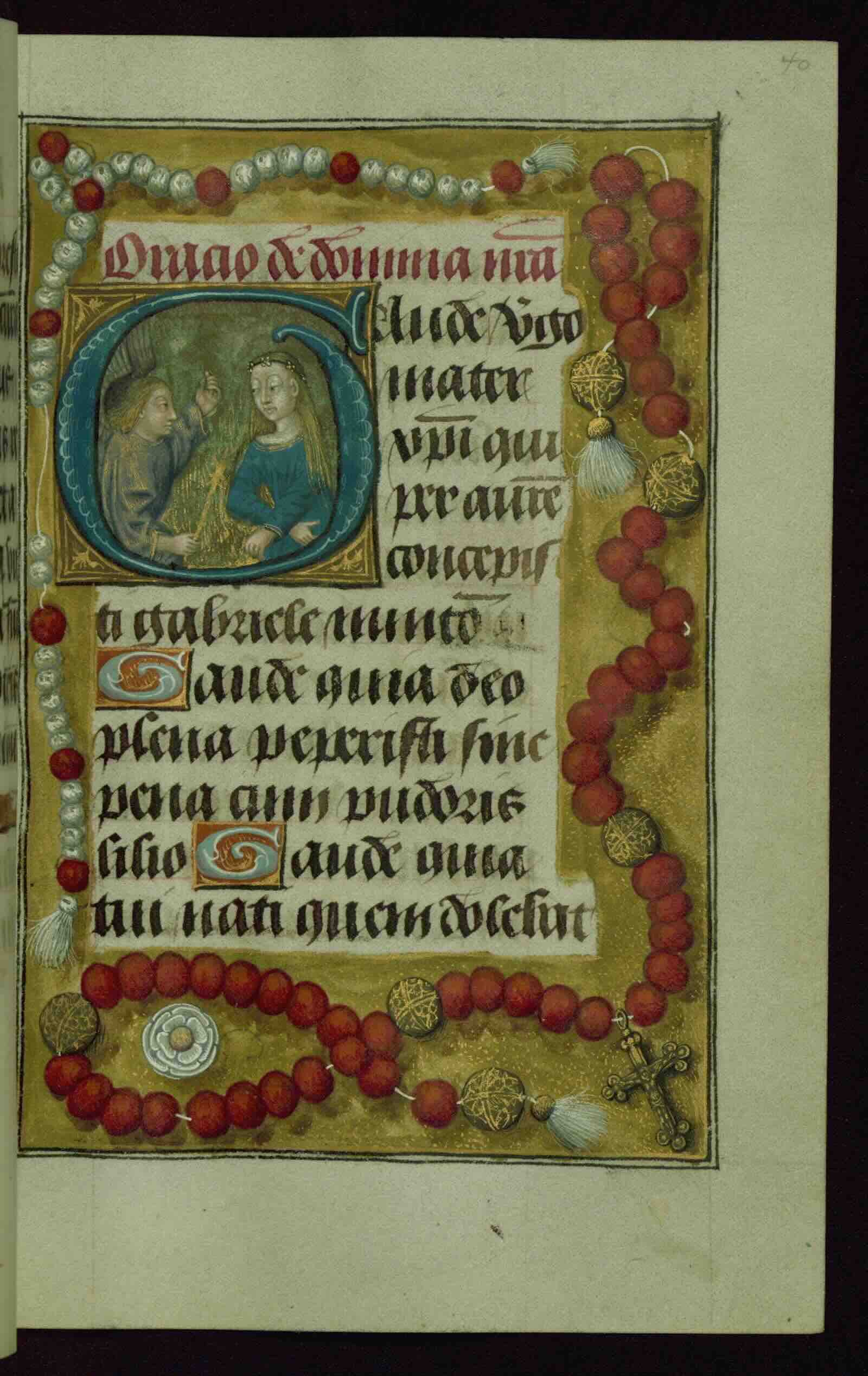
Initial with the Annunciation Surrounded by Prayer Beads, Hours of Duke Adolph of Cleves. Belgium (Ghent), ca. 1480–1490. Ink, paint, and gold on parchment.
3/5
Walters Art Museum
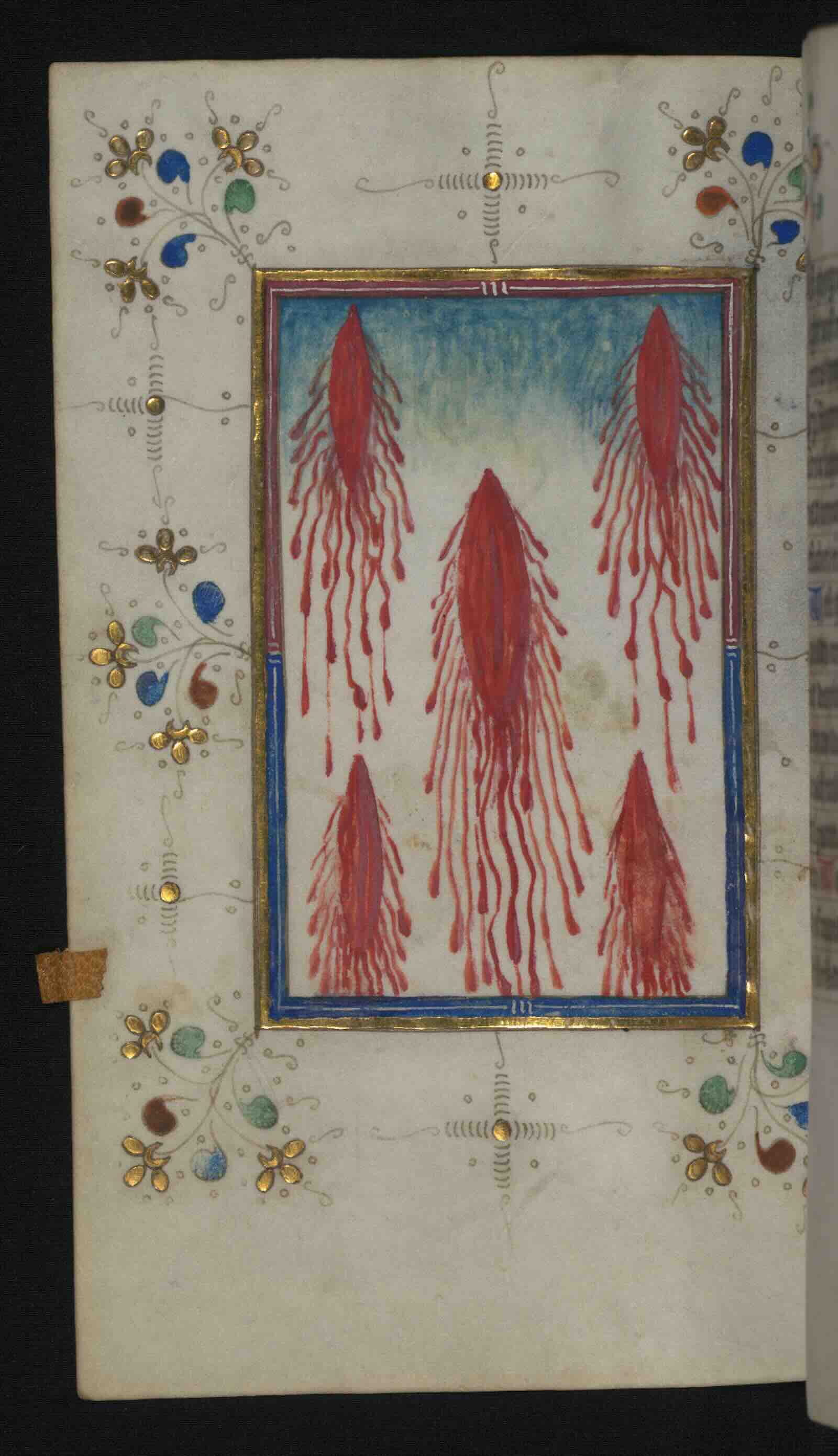
The Wounds of Christ, The Loftie Hours, Masters of the Delft Grisailles, Netherlands, mid-15th century. Ink, paint, and gold on parchment.
4/5
Walters Art Museum
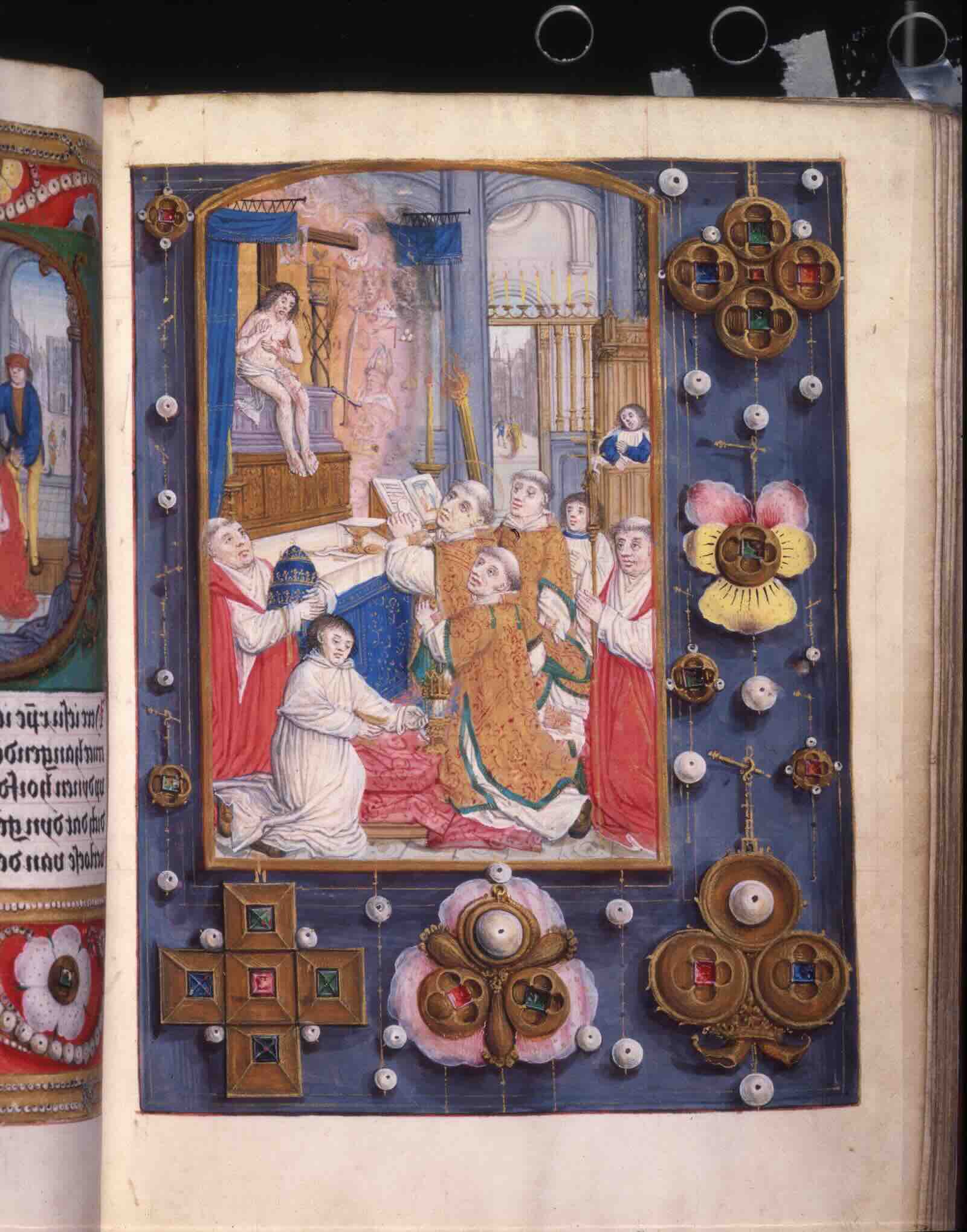
Mass of Saint Gregory, The Aussem Hours, Germany (Cologne), early 16th century. Ink, paint, and gold on parchment.
5/5
Walters Art Museum
A Male Patron’s Vision with the Virgin Mary and Christ Child, Book of Hours, Belgium (Ghent), 2nd quarter of the 15th century. Ink, paint, and gold on parchment.
In the second image, a remarkably lifelike rosary made of gold, coral, and pearl wraps around the text, suggesting that its owner might have held similar prayer beads while engaging in his private devotion. A smiling, fleshy skeleton is depicted in the third picture, offering an unexpectedly chilling presence. Likely a personification of death, the skeleton seems eerily aware of the viewer, confronting them with a mirror and compelling them to contemplate their fate by imagining themselves in its reflection.
The Walters Art Museum’s collection of rare books and manuscripts chronicles the art of the book over more than 2,000 years from ancient to modern times through almost 1,000 illuminated manuscripts, over 1,300 of the first printed books (ca. 1455–1500), and an important collection of nearly 2,000 rare post-1500 tomes.