World War I & II Book Drives Brought Reading to the Front Lines
Donation drives during the two world wars were powerful symbols of the freedom to read
Private Collection, Courtesy Poster House
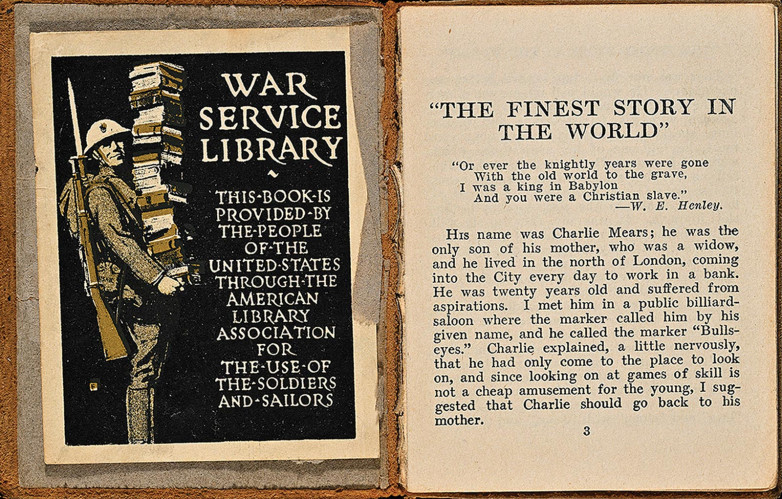
The World War I-era bookplate with art by Charles Buckles Falls made for donations to the War Service Library.
For over a decade, I have researched and written books about the extraordinary efforts by librarians and book publishers to provide hundreds of millions of books to American troops in World Wars I and II. To give some background, during World War I, the American Library Association galvanized the American public to donate books and money so that troops would have reading materials during lulls in training or fighting overseas. As a result, millions of books joined the services. In 1942 and 1943, American librarians launched the national Victory Book Campaign and collected over 18 million books from the public to give to American troops. Over the course of these book drives, librarians educated the American public about the importance of reading to preserve and maintain democracy and how reading was an act of resistance to the widespread destruction of books across Europe.
While working on When Books Went to War (Houghton Mifflin Harcourt, 2014) and my forthcoming book, A Librarian’s War (Oxford University Press, 2026), I have collected books that bear the markings of going to war. Telltale signs usually appear on the inside front cover—from handsome bookplates to stamps. In researching these markings—which range from the decorative to the strictly utilitarian—I uncovered an entirely different world of paper artifacts that help tell the story of these book programs. To advertise the need for the public to give books to troops, dozens of posters combining gorgeous illustrations by renowned artists with heartfelt pleas for books were displayed across the United States. What began as an interest in the books that were donated blossomed into an exploration of the posters that made a success of the book campaigns of the world wars. A new exhibition I curated on this subject, Reading Under Fire, is now on display through November 1, 2026, at Poster House in New York City, showcasing dozens of captivating wartime book posters.
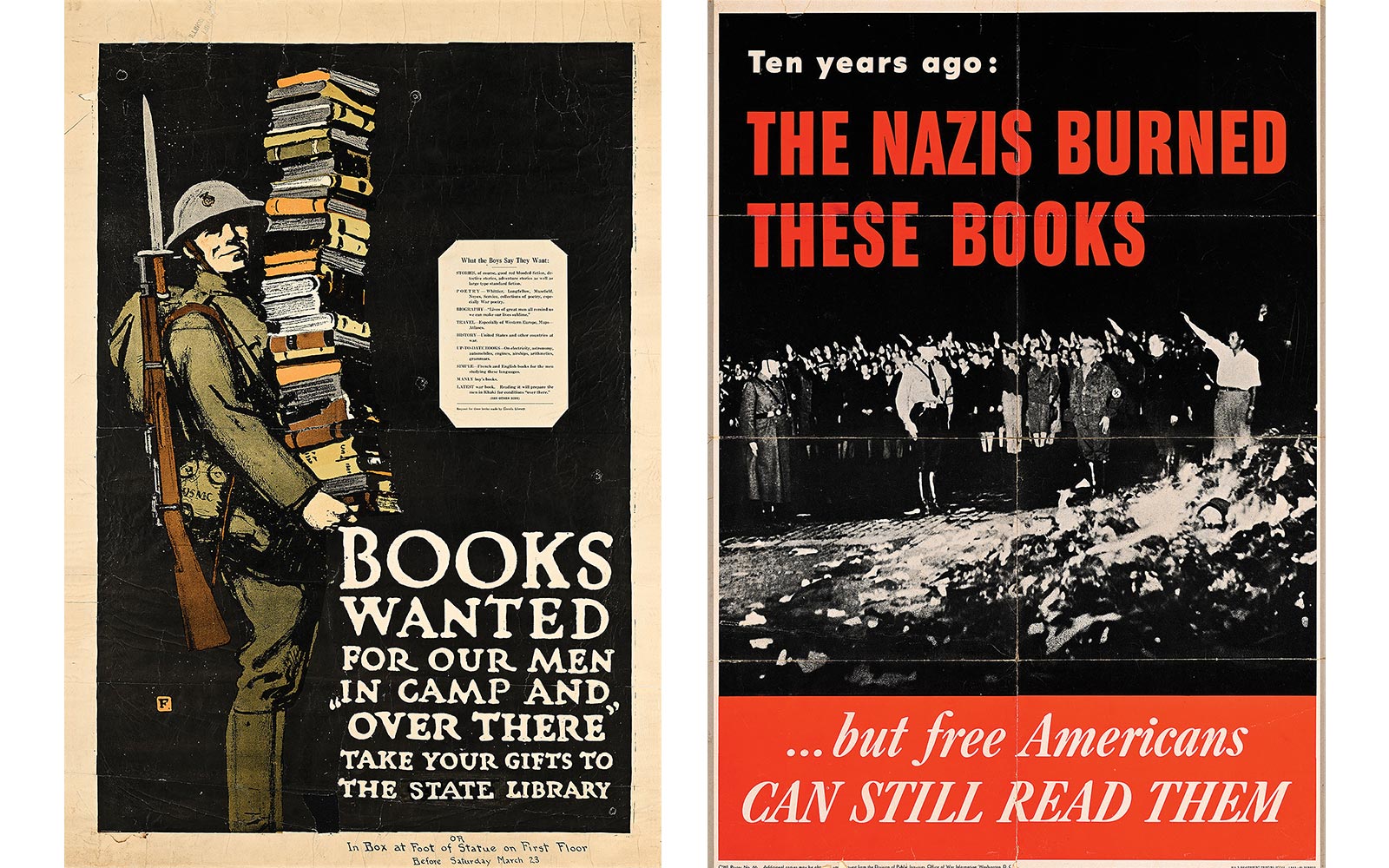
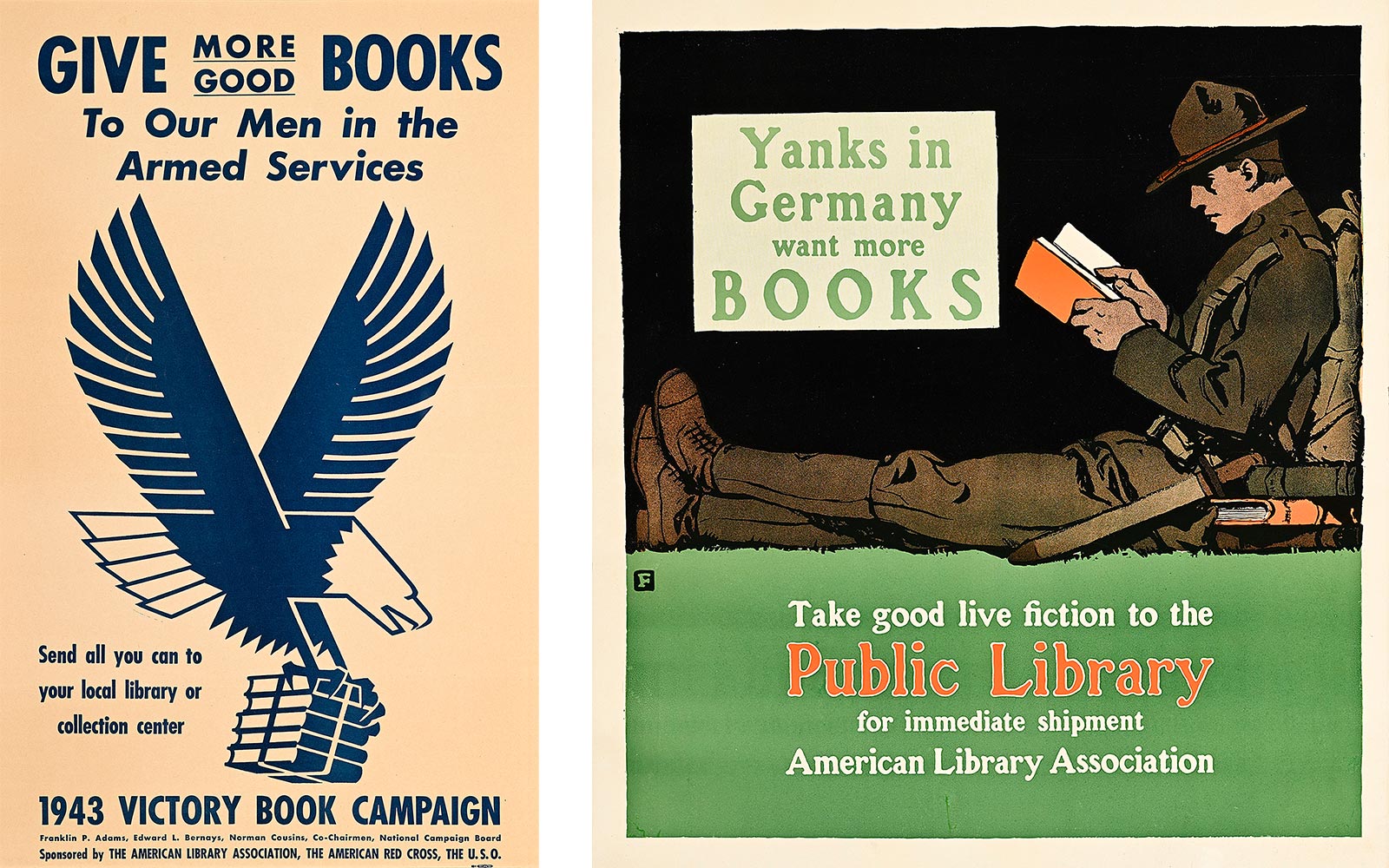
There was one bookplate that helped me discover the bridge between collecting wartime books and the complementary world of book posters. It features a colorful illustration of a helmeted soldier in uniform, his bayonet slung over his shoulder, and a towering pile of books in his arms. This bookplate was affixed to all donated books so that troops knew they were gifts from the American public. The original artwork of this book-loving soldier was not created for a bookplate. Rather, in 1918, Charles Buckles Falls was commissioned by the American Library Association to paint a 15-foot mural on the steps of the New York Public Library to advertise the need for book donations. It was on this mural where his famous soldier first came to life, along with the simple message: “Books Wanted for Our Men in Camp and ‘Over There’ Take Your Gifts to the … Library.” It was such a striking image that it was reproduced on donation bookplates as well as posters. One poster was a facsimile of the original mural and was distributed to libraries across the country to publicize the World War I book drive. A second version was created for soldiers in France; it informed them that the American Library Association had opened an American library in Paris that soldiers could freely use. These original posters, along with a book bearing the corresponding bookplate, are all on display in Poster House’s Reading Under Fire.
1/5
Private Collection, Courtesy Poster House (2)
Left: “Books Wanted” library poster created with art by Charles Buckles Falls (1918). Right: A poster published by the US Government Printing Office in 1943 featuring a photograph of a Nazi book burning.
2/5
Private Collection, Courtesy Poster House (2)
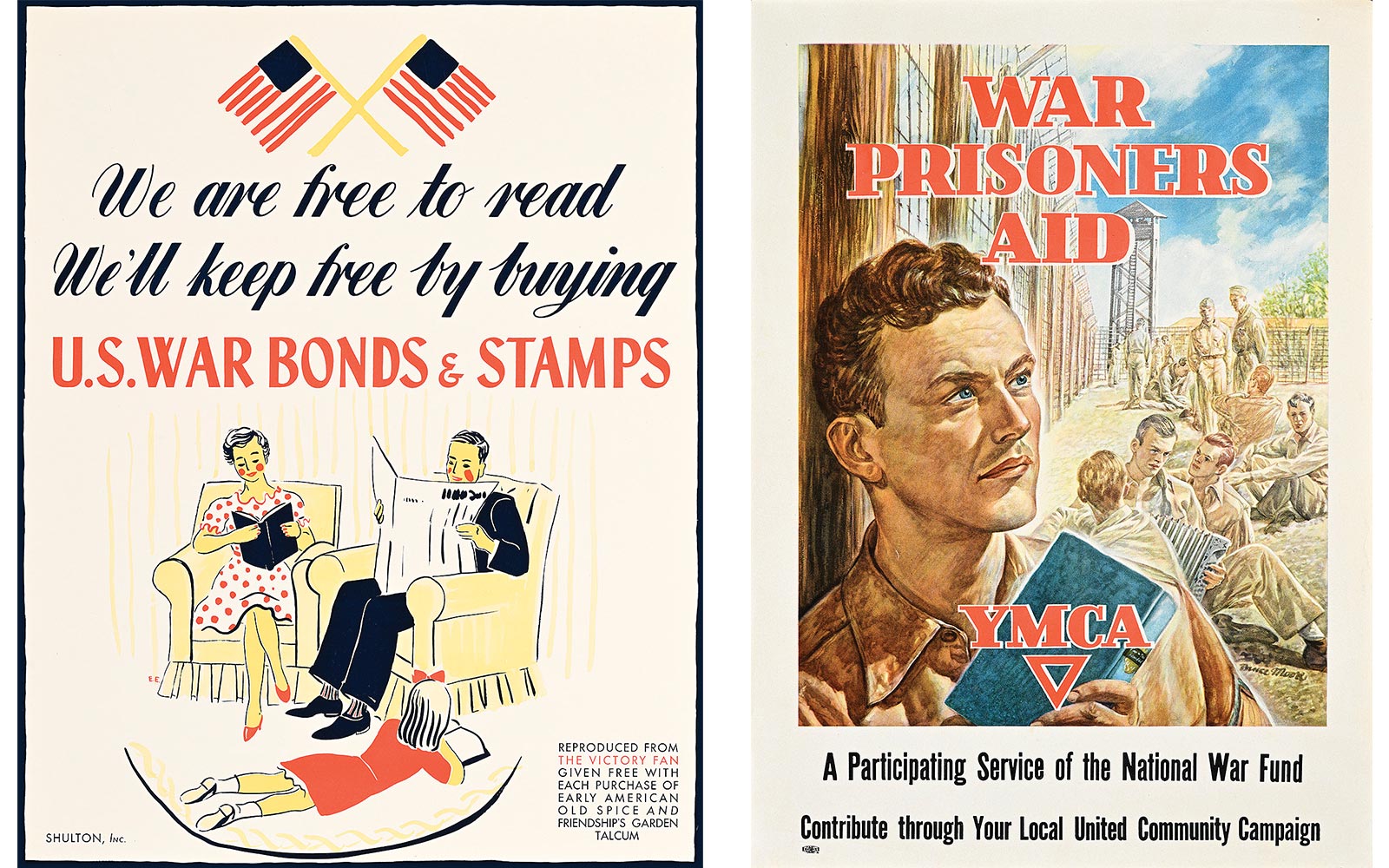
Left: 1942 poster from the Shulton Company promoting U.S. War Bonds & Stamps. Right: A YMCA War Prisoners’ Aid poster (ca. 1945) with art by Bruce Moose.
3/5
Private Collection, Courtesy Poster House (2)
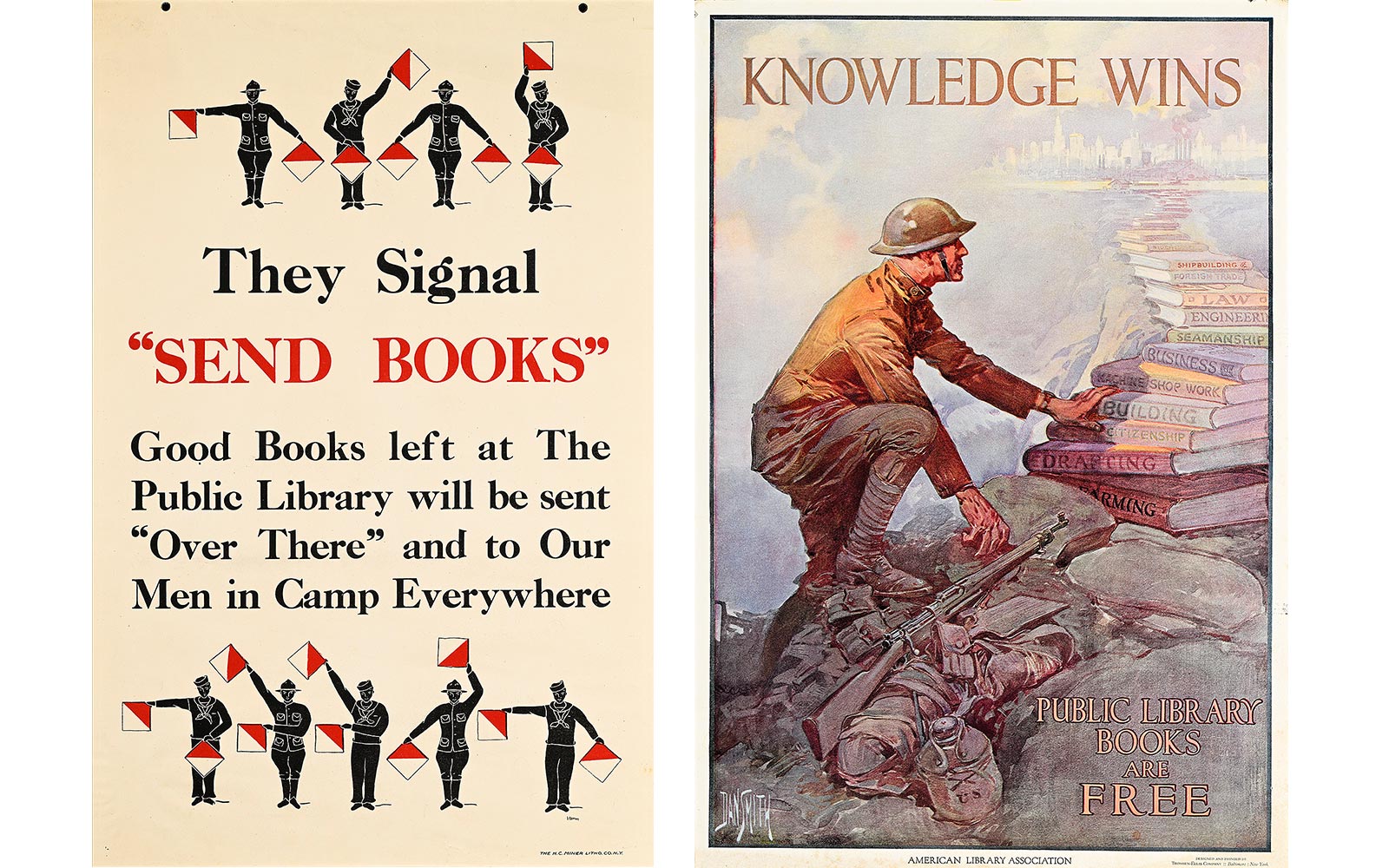
Left: “They Signal ‘Send Books’” (1917). Right: Dan Smith, “Knowledge Wins” (1918).
4/5
Private Collection, Courtesy Poster House (2)
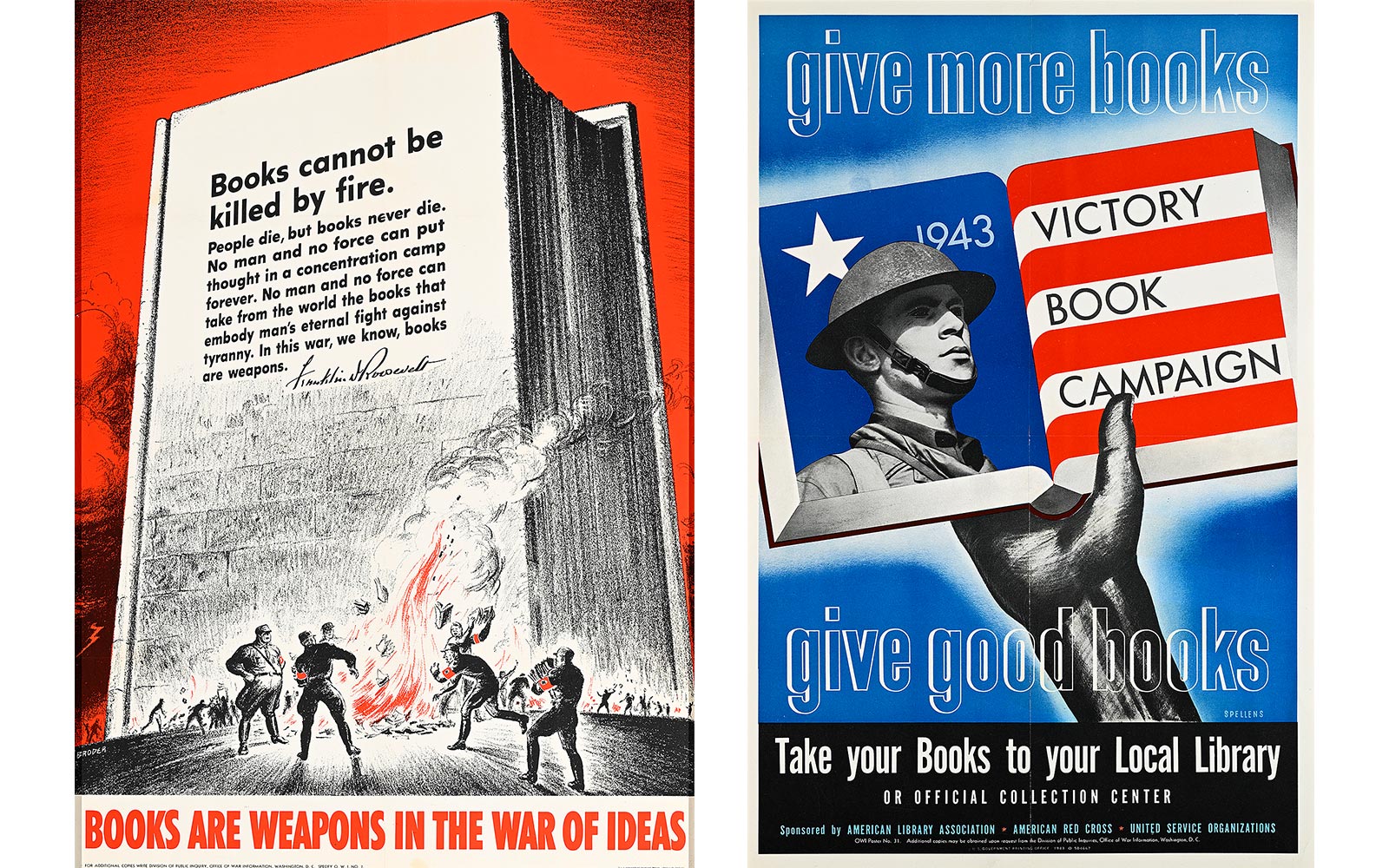
Left: S. Broder, “Books Are Weapons in the War of Ideas” (1943). Right: Irving Spellens, “Give Good Books” (1943).
5/5
Private Collection, Courtesy Poster House (2)
Left: “Give More Good Books” (1943), designer unknown. Right: Charles Buckles Falls, “Yanks in Germany Want More Books” (1918).
As for World War II books, the Victory Book Campaign (VBC) collected millions for troops; however, instead of using an attractive bookplate for donated books, VBC books bear a no-frills ink stamp that states “Gift of the People of the United States through the Victory Book Campaign.” Perhaps the VBC made up for this lack of artistry in its stamp by producing a variety of striking posters with spirited pleas for books that relied on classic American symbolism, like flags and eagles. These posters appealed to Americans’ sense of patriotism and conveyed how books were inextricably linked to the preservation of democracy. Among the many posters the VBC commissioned, two that stand out include one where the essence of the American flag is superimposed on a book and another that has an eagle with its wings shaped in a “V” for victory and its talons clutching a bundle of books on their way to troops.
Other posters connected reading and books to the fight for democracy, and I was surprised to learn that both the US government and big businesses produced posters to educate the public on the importance of maintaining and practicing the freedom to read during World War II. In 1943, the government printed posters to commemorate the Nazi book burnings that occurred ten years earlier. One used a photograph of the 1933 Berlin book burning as its foundation, and its tagline contrasted Germany’s censorship of ideas with the freedom to read in the US: “Ten Years Ago: The Nazis Burned These Books… but free Americans CAN STILL READ THEM.” Exploring the same theme with a wholesome scene—a family reading together in their living room—the Shulton Company, manufacturer of Old Spice shaving products, encouraged Americans to purchase war bonds to preserve their democratic right to be “free to read.”
One of the rarer stamps that can be found inside books from World War II indicates that a book did not go to a war zone, but to a prisoner of war (POW) camp. The YMCA War Prisoners’ Aid division distributed books to American POWs so they would have a temporary distraction from their captivity. These books typically have a YMCA stamp on the inside cover. To raise awareness of the YMCA’s work in providing recreational materials to POWs, the YMCA printed posters that show prisoners within a fenced yard with a soldier in the foreground holding a book.
As the role of books in American life faces challenges today—whether that is through book bans, eliminating funding for libraries, or a growing reliance on digital media—Reading Under Fire provides a fascinating look at how books played an essential part in fighting for democracy during the World Wars.