British Library Acquires Archive of Rural Life Chronicler Ronald Blythe
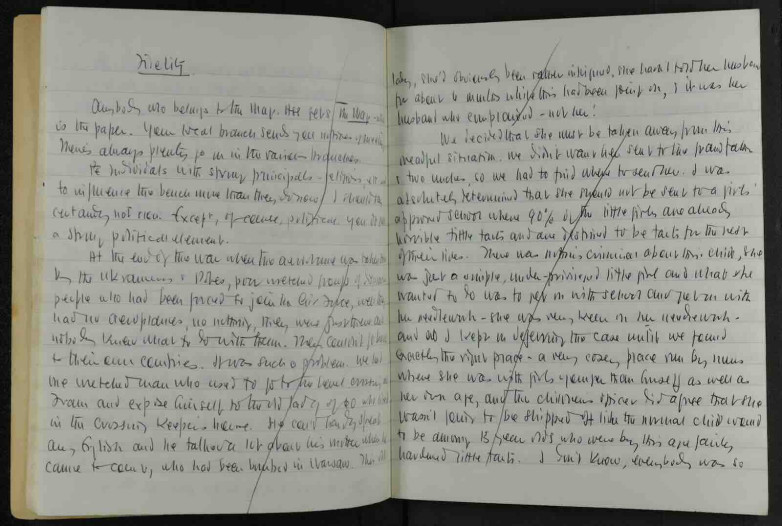
Ronald Blythe's Fidelity notebook.



The British Library has acquired the literary archive of writer and essayist Ronald Blythe and will mark it with an evening of celebration of his work on February 23.
Blythe (1922-2023) was born in Suffolk, England, and spent almost his whole life living in a small area of Suffolk and Essex. Initially a reference librarian in Colchester, Blythe was encouraged to become a writer by his friend the artist Christine Nash. He had a prolific output, publishing more than 40 books many of which explored themes around nature and place including his 1969 masterpiece Akenfield: Portrait of an English Village which was later adapted into a film with the director Peter Hall.
Blythe was a life-long Anglican, and the archive also includes drafts of the regular column Blythe wrote for The Church Times for 24 years. Word from Wormingford, which was written in the house Blythe was gifted by artists Christine and John Nash, reflected on the passing of the seasons and offered an intimate insight into Blythe’s spiritual beliefs.
Highlights of the archive include:
- notebooks used by Blythe to record his ideas and research
- drafts of Akenfield, along with photographs, correspondence and other papers relating to the novel’s film adaptation in 1974
- drafts and notes relating to The View in Winter, Blythe’s book exploring the difficulties of ageing, again using the experiences of people whom he knew such as John and Christine Nash
- letters exchanged with novelist Patricia Highsmith throughout the 1960s and 1970s
- drafts of Blythe’s Word from Wormingford column that appeared in The Church Times from 1993 to 2017
The archive offers a fascinating insight into societal change in England during the 20th century, with a particular focus on rural life and the impact of World War One. The Library also holds the archives of writers John Berger and Laurie Lee, and the depictions of rural life in Akenfield offer a valuable counter-point to the bucolic Gloucestershire of Lee’s Cider with Rosie and Berger’s evocation of life in the French Alps in the Into Their Labours series. Blythe was also a friend of Suffolk native and composer Benjamin Britten, a number of whose letters can be found in the Library’s Music collections.
"Ronnie was a complete original," said Ian Collins, Ronald Blythe’s literary executor and biographer, "a self-taught and poetic chronicler of rural and spiritual life, nature and literature. He lived a joyful century close to his Suffolk roots, writing and walking into his mid-nineties and was a sociable hermit who corresponded with a wide network of friends and fans. Neat and rich and full of surprises, his archive reflects the orderly mind of a former librarian who came to write with wit, erudition, boundless imagination and gratitude for everyday existence."