Unseen Charles Dickens Items on Display for First Time
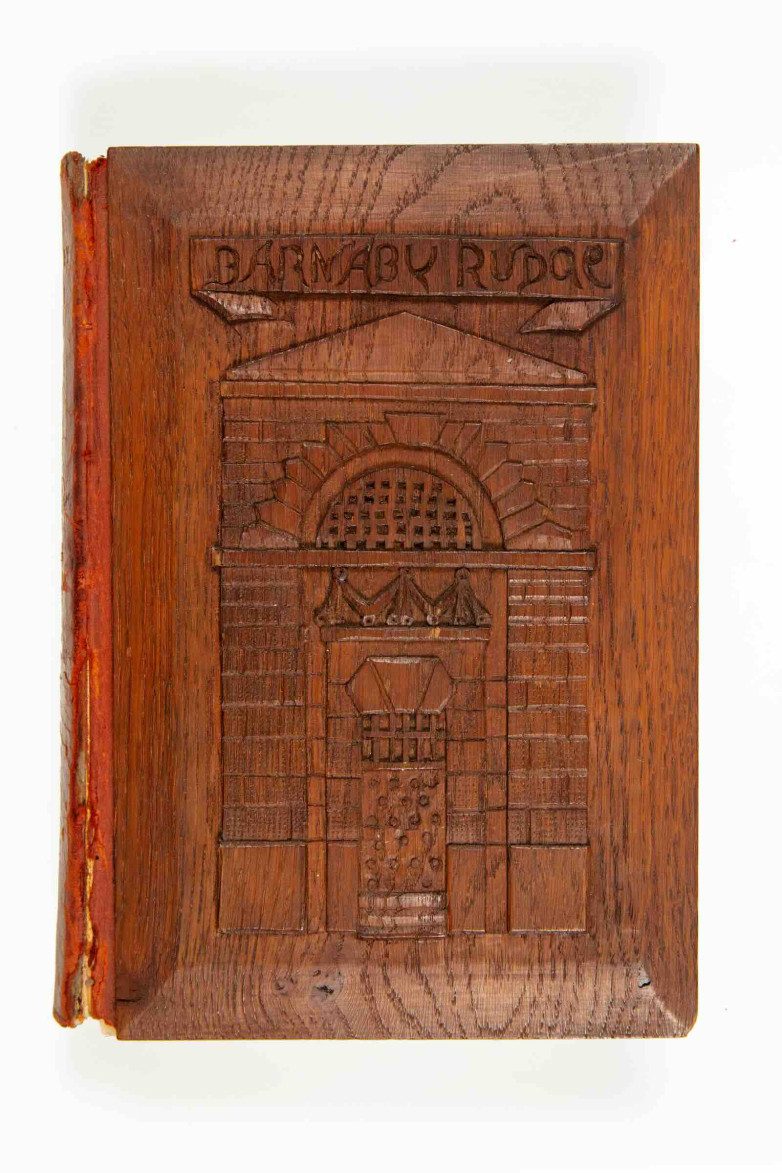
Barnaby Rudge made from Newgate Prison wood



Dickensian London: The Magic Lantern City is a new exhibition exploring the city which inspired Charles Dickens.
Running October 21 through April 18, 2027 at the Charles Dickens Museum in London, among the items on display for the first time will be a 1904 edition of Barnaby Rudge bound in wood from Newgate Prison which features in four of his novels, as well as his essay Night Walks. In Barnaby Rudge, Barnaby is caught up in the anti-Catholic Gordon riots and imprisoned in Newgate.
Also on display for the first time in nearly a century is a wooden balustrade from the White Hart coaching inn at Southwark. In Dickens’s first novel The Pickwick Papers, Mr Pickwick first meets Sam Weller at a coaching inn called the White Hart. Dickens describes "a double tier of bedroom galleries, with old clumsy balustrades …" just like the one in the exhibition.
Other highlights include:
- Charles Dickens’s walking stick which played an important part of Dickens’s working process - every afternoon he walked at least six miles, and in a letter to his friend William Macready he described himself "revolving new books in his mind, and walking perpetually."
- the original 1837 handwritten manuscript of Oliver Twist written at the museum at 48 Doughty Street, and clearly influenced by the surrounding area
- The Little Wooden Midshipman shop sign from William Heather’s nautical shop at 157 Leadenhall Street which Dickens frequently saw as he walked through London’s shipping quarter, and which appears in Dombey and Son, "taking observations of the hackney carriages" at the entrance to Sol Gil’s nautical instrument shop; Dickens describes the effect of the London weather on the Midshipman, "a dry day covered him with dust, and a misty day peppered him with little bits of soot"
As visitors move around the exhibition, a soundscape will shadow Dickens as he takes a walk from Doughty Street, through local streets and down to the Thames. At different points in the exhibition, visitors will be greeted by the smells of Dickensian London, both fragrant and revolting.
“London was Dickens’s magic lantern, providing him with image after image to transform into stories," said exhibition curator, Emma Harper, Deputy Director of the museum. "200 years on, his writing is still shining a light on what Victorian London looked like, bringing to life its sights, sounds and smells and creating a vivid view of the city which translates into Dickensian London.”