Original Scott Joplin Agreement Leads New Exhibition Tracing History of Ragtime
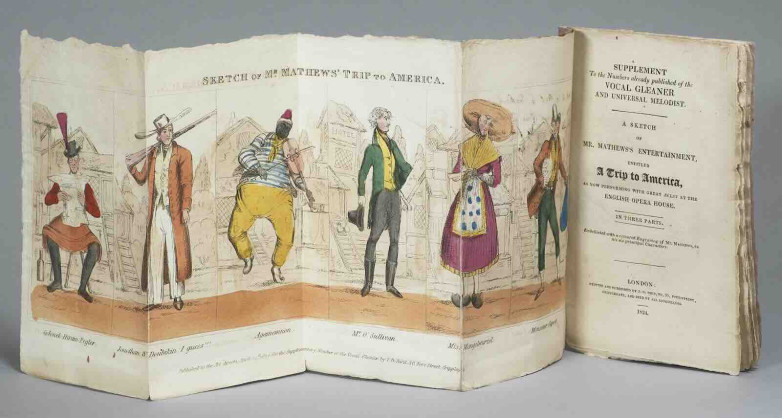
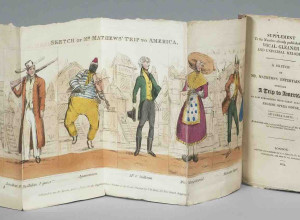
Charles Mathews (1776–1835) Sketches of Mr. Mathews’s 'Trip to America' Including the Songs, Adventures, Anecdotes, etc. (London, J. D. Bird, 1824)



Ragtime: Cakewalk in Pianoland following ragtime's path from the musical traditions of enslaved Black people to the world's concert halls will go on show at The Morgan Library & Museum next month.
“Ragtime transformed American music, laying important groundwork for jazz and influencing generations of musicians,” said Colin B. Bailey, Katharine J. Rayner Director. “The Morgan tells this story through the printed music and other materials in our collection that document ragtime’s history and cultural impact, including our significant holdings of works by Scott Joplin."
On view from November 13 through June 13, 2027, the exhibition begins in the late 18th century with Black caricature on the stage. The opening section examines blackface and racial mimicry, confronts the rise of blackface minstrelsy, and looks at the careers of Ernest Hogan (1865–1909), one of the songwriters who originated ragtime, and composer Scott Joplin (1868–1917) whose piano ragtime most epitomizes ragtime in the public imagination today.
Through his partnership with publisher John Stark, Joplin sought to bring ragtime into the classical music domain. A highlight is the original agreement signed between Joplin and Stark for Joplin’s Maple Leaf Rag showing that Joplin, unusually, received a royalty for his work. Published in 1899, the piece was one of the best-selling and most defining titles of the era. Also on display will be the score to Joplin's 1911 opera Treemonisha with corrections in the composer’s hand.
Other items on show include include:
- the scores for Billy Kersands Minstrels Song Book (Chicago, Will Rossiter, ca. 1885–1907) and John William Boone's Southern Rag Medley No. 2: Strains from the Flat Branch (Columbus, MO: Allen Music, 1909)
- a March 27, 1880 playbill The Famous Hyers Sisters Combination, Assisted by the Only Colored Comedian, Sam Lucas, in Their New Edition of Out of Bondage, or From Slavery to Freedom
- Charles Mathews's Sketches of Mr. Mathews’s “Trip to America” Including the Songs, Adventures, Anecdotes, etc (London: J. D. Bird, 1824)
- a The Queen of the Cakewalk, Aida Overton Walker postcard
The 'Homegrown' section of the exhibition focuses on ragtime as a product of Black innovation and Black American experiences, and traces ragtime’s move into Broadway musical theater through works by Will Marion Cook, Bert Williams, and George Walker, as well as the literary responses of writers including Charles W. Chesnutt, Paul Laurence Dunbar, and James Weldon Johnson who used fiction to examine the racial stereotypes upon which ragtime’s popularity depended.
The exhibition concludes by focusing on ragtime’s afterlife, from its engagement by European modernists such as Igor Stravinsky, to its role in E. L. Doctorow’s 1975 novel Ragtime and its later 20th century revival, spurred by the rediscovery of Joplin’s scores.