Two Centuries of African American Writers Celebrated at Grolier
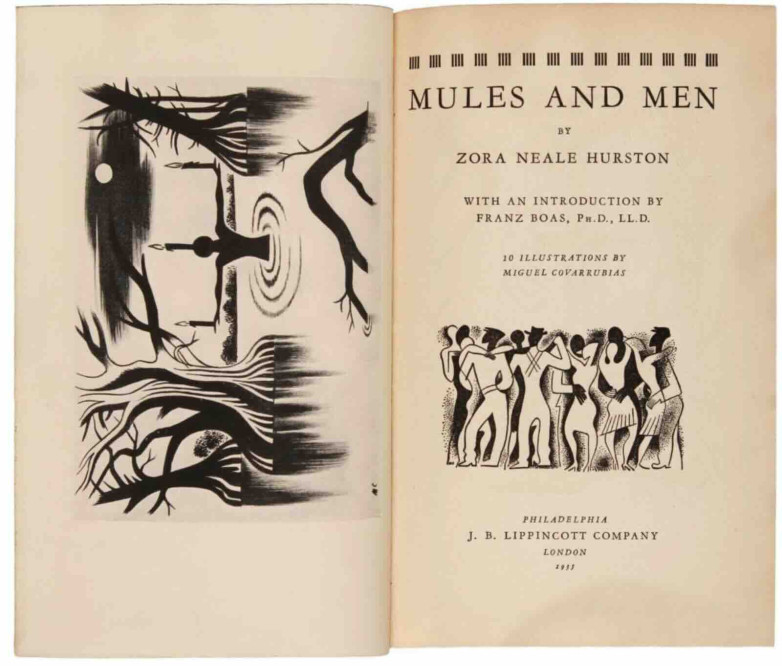
Zora Neale Hurston, Mules and Men (Philadelphia, London: JB Lippincott, 1935)



The Grolier Club will open an exhibition later this year telling the story of Black people in America from early writings by free Black people through the Black Arts Movement and beyond.
Running December 3 through February 20, 2027, Black Brilliance: An American Chronicle will feature around 100 books and printed works from the book collection of Grolier Club member Alvin A. Patrick, Jr. spanning more than two centuries.
“At a time when most people in the country deemed African Americans to be sub-human, the words, thoughts, and images of Black Americans were published widely,” he said. “Poetry, novels, short stories, biographies, and essays showed the world the intellectual, emotional, and oratorical capacity of these brilliant men and women, many of whom were formerly enslaved.”
The exhibition begins with the 'slave narrative' genre, stories of enslaved men and women in their own words followed by post-Emancipation era stories of freedom and entrepreneurship. One of the earliest works on view will be B.B. Thatcher’s Memoir of Phillis Wheatley: A Native African and A Slave (Boston: George W. Light, 1834), a biography of the first African American poet to write for a transatlantic audience.
Other early works on view are a first edition of Frederick Douglass’s My Bondage My Freedom (Buffalo: Miller, Orton & Mulligan, 1855) which recounts his personal transition from slave to fugitive to reformer, and William Still’s The Underground Railroad (Philadelphia: Porter & Coates, 1872) written by the 'Father of the Underground Railroad' who worked closely with Harriet Tubman, and which chronicles the stories of more than 600 enslaved people who found freedom via the secret network.
Other highlights include:
- Frances E.W. Harper’s Iola Leroy or Shadows Uplifted (Boston: James H. Earle, 1895, third edition), one of the first novels written by an African American woman
- a first edition of Paul Laurence Dunbar’s book of verse Lyrics of the Hearthside (New York: Dodd, Mead & Co, 1899) written when Dunbar worked as an elevator operator and which features a poem with the closing line “I know why the caged bird sings!”
- a first edition of Booker T. Washington’s Up From Slavery (Garden City, New York: Doubleday, Page & Co, 1901) telling the story of his journey from an enslaved child to founder of Tuskegee Institute
- a first edition of W.E.B. Du Bois' The Souls of Black Folk (Chicago: A.C. McClurg & Co, 1903), a collection of sociological essays that famously stated “The problem of the twentieth century is the problem of the color line.”
- a first edition of Zora Neale Hurston’s Mules and Men (Philadelphia, London: JB Lippincott, 1935), her collection of African American folktales gathered in Florida and Louisiana
- Ann Petry’s The Street (Boston: Houghton Mifflin Harcourt, 1946), the first novel written by an African American woman to sell more than one million copies
- an inscribed first edition of Gwendolyn Brooks’ Annie Allen (New York: Harper & Brothers, 1949), a book of poems about the life of a fictional African American girl, for which Brooks became the first African American writer to win a Pulitzer Prize