Huntington Acquires Japanese Manuscripts, Arctic Exploration Photos, and 17th Century Jail Records
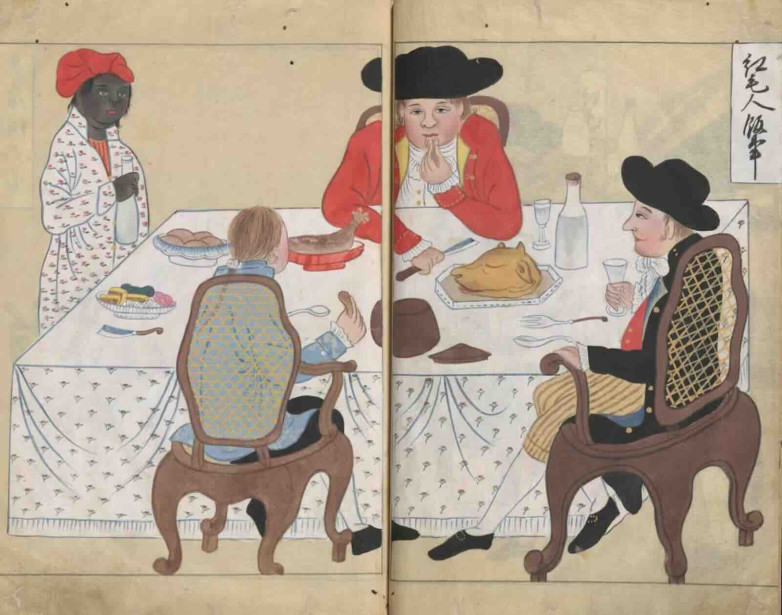
Illustration of men dining in the Dutch enclave of Dejima in Nagasaki, Japan, from Nagasaki hyōsho zu–Karafune hyōsho zu (Illustrated Record of Nagasaki–Illustrated Record of Chinese Ships), 1807.



The Huntington Library has acquired works spanning Edo-period Japan, Arctic exploration, early America, English criminal justice, colonial Mexico, and experimental photography in Los Angeles.
Headlining the acquisition is an illustrated Japanese manuscript, Nagasaki hyōsho zu–Karafune hyōsho zu (Illustrated Record of Nagasaki–Illustrated Record of Chinese Ships). The two manuscript volumes contain 70 single and double-page gouache plates, offering detailed descriptions of Dutch and Chinese merchants’ compounds in Edo-period Nagasaki.
Created in 1807 by Harufusa Tazawa, a little-known government official, the manuscript meticulously depicts the tightly controlled foreign enclaves of Nagasaki during Japan’s era of enforced isolation. The manuscript offers a pictorial record of architecture, trade logistics, and cultural details as European dining practices, surgical procedures, and the presence of Javanese servants. It also documents religious policing, including the practice of fumi-e, in which Japanese people suspected of being Christians were required to step on icons to prove that they were not Christian.
Other highlights include:
- William Bradford’s 1873 The Arctic Regions, a monumental record of an artistic expedition to the western coast of Greenland featuring 140 original albumen silver prints taken by master photographers John B. Dunmore and George B. Critcherson depictingglaciers, icebergs, ships in polar seas, and Inuit life plus accompanying text written by marine painter and expedition visionary William Bradford
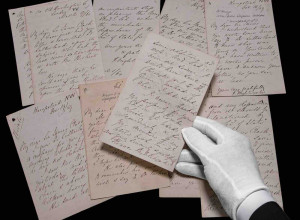
- a cache of 44 letters from would-be English entrepreneur William Herries (1748–1811) charting the journey of a scion of a prominent British merchant family who set out in 1804 to make his fortune in the newly expanded United States, and detailing dinners with Thomas Jefferson, observations on the fragile politics of the early republic, and numerous moneymaking schemes from urban developments and plantation enterprises powered by enslaved labor to building his own city
- a collection of 42 loose manuscript 'calendars' listing prisoners held in a Staffordshire jail between 1661 and 1689, the largest known systematic run of such records for any English jail of the period, recording accusations of witchcraft, murder, theft, bigamy, and infanticide
- an unpublished, 60-page manuscript report from 1588 by the Spanish soldier Martín de Herrera, a sustained attack on Álvaro Manrique de Zúñiga, the Viceroy of New Spain (Mexico) whom Herrera accuses of corruption, tyranny, and betrayal
“In word and image and artifactual presence, these materials capture ideas, individual and community lives, historic and quotidian events, and the natural world as it was,” said Sandra Brooke Gordon, Avery Director of the Library.