



How about the most recent book?
Last week, I bought a first printing of Lord Byron’s The Prisoner of Chillon and Other Poems (1816) for a very small sum. I took a gamble on it, since the photos were pretty low quality and there were only a few pictures of its contents. Luckily, it is complete and the pages are in very good condition, except the spine is about to fall off!
I found it super interesting how Lord Byron and Percy Shelley wanted to surround themselves with the stories they were writing, and actually traveled to Chillon castle and walked through its prisons to imagine the death and suffering that took place there. The Prisoner of Chillon is a great poem, but what really interested me was another poem printed in the pamphlet titled Darkness. It’s an apocalyptic poem by Byron, written in the context of the “year without a summer” (1816) when global temperatures dropped, hundreds of thousands died due to crop shortages, and many believed that the world was actually going to end. It makes sense that 1816 was also just a crazy year for gothic literature in general (Frankenstein!). The way that Byron, through this poem, transformed the fears many had about the state of the world really resonated with me, especially considering what current events we’ve all lived through, from climate change, to COVID, to the global state of panic and destruction that we’re experiencing right now. Byron weaves in other current themes of corruption, loss of power, human connection, and inevitable demise.
And your favorite book in your collection?
Tied between three: A book given to mourners (1823), a set of 18th century books of poetry owned by Juliet Foord-Bowes, and a victorian macabre children’s book.
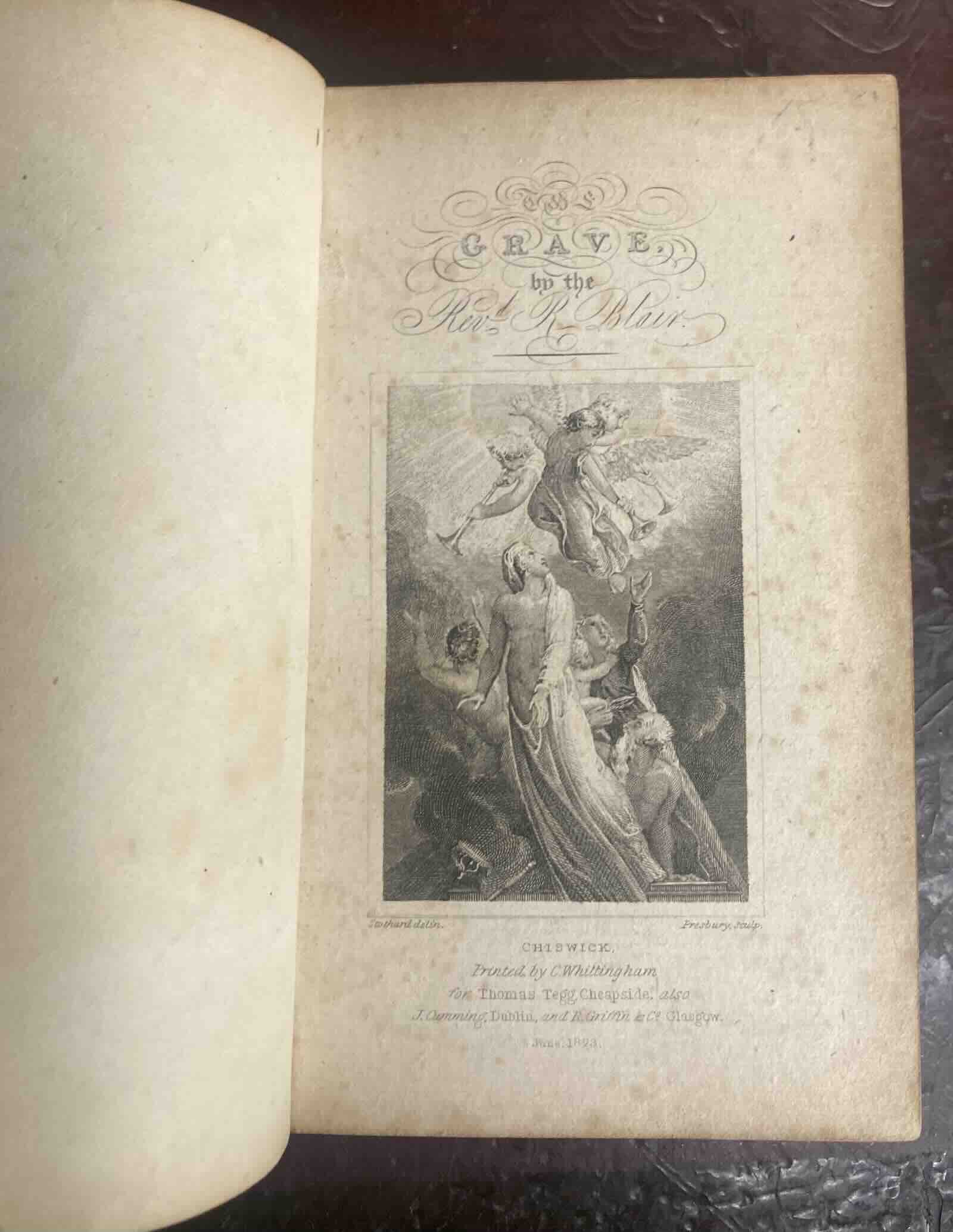
The book for mourners is a compilation of five poems which all discuss death and the afterlife. It includes The Grave by Robert Blair, Death by Beilby Porteus, and others. In Death the narrator has witnessed his friend die, and wishes his own death is peaceful. "Friend to the wretch whom every friend forsakes, I woo thee, Death! — Life and all its joys I leave to those that prize them. "
The book is very small and pocket-sized, and could have easily been carried with its owner while they used it to reflect on the loss they had experienced. What made this copy especially powerful was its personalized inscription of an address and a name. They must have really valued its company, and very well could have taken it on their travels as they navigated grief, making sure to include their information in its pages if it was lost. I treasure it knowing that it was of great importance to someone, and can’t help but imagine who this person could’ve been.
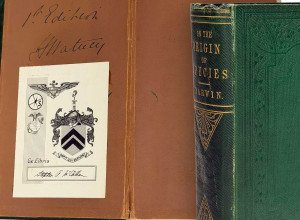
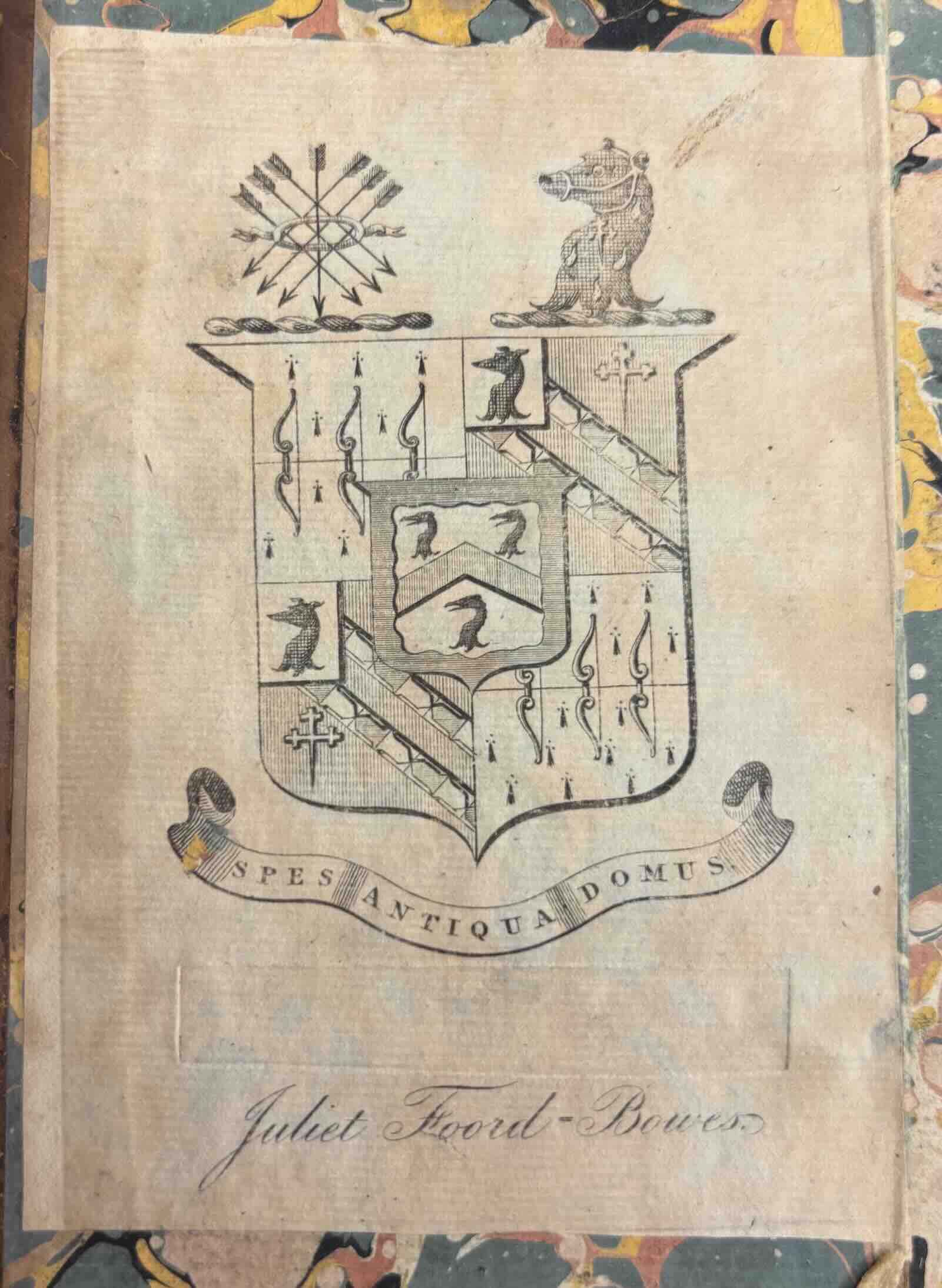
As for the books owned by Juliet Foord-Bowes, it was her bookplate and where it led me that made it such a memorable group of books in the collection (the books themselves are not related to death).
After buying the set at an estate sale, I wanted to find out who Juliet Bowes was. It was difficult to find any information online, and the only documents I could find were written about her husband. I looked up her name and family crest, but couldn’t find anything. However, while walking through Mount Auburn cemetery in Boston I looked into their registry, curious about one of the graves I had passed. It was then that I realized how useful graveyard databases are for finding the identities of people forgotten to time. It was this realization that led to the discovery of the online registry for St. Mary’s Churchyard in Yorkshire where Juliet Bowes was buried. Her bookplate, including its motto, is carved in marble on her tombstone: SPES ANTIQUA DOMUS.
It felt surreal to find the images of her grave, and sit at home holding a book that had belonged to her, a small piece of her memory. Since, I’ve found the graves of eight others whose bookplates I own, and have subsequently visited some of their graves. The entire experience showed me how temporary everything is, including the collection I’m building. Someday, someone else may pick up a book that was once part of my collection and appreciate it once more. Things will gain new meaning as they pass through new hands.
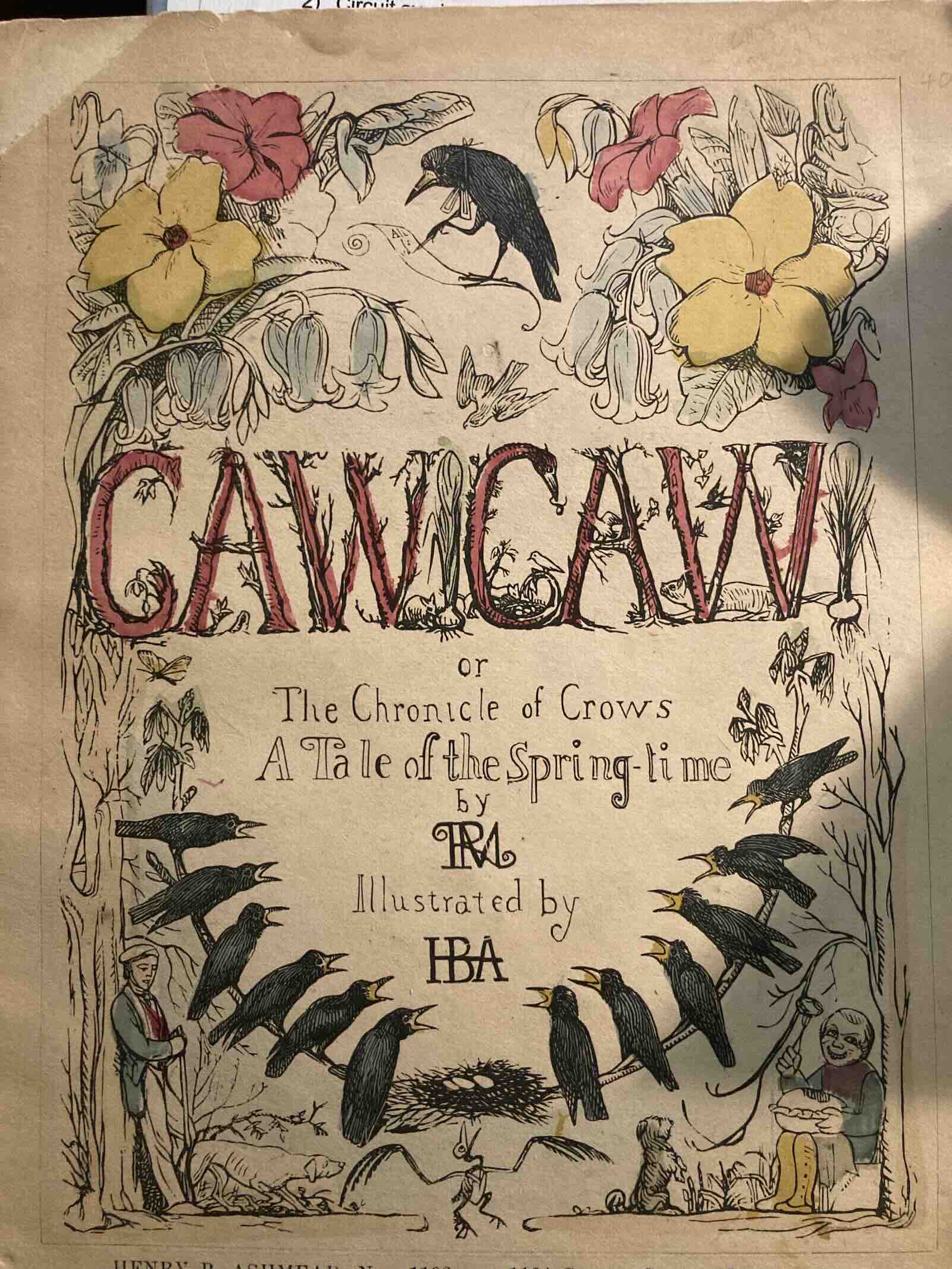
CAW CAW! Or a chronicle of crows, A tale of the springtime was printed in Boston in the 1850s. This dark children’s book, most likely printed first by a press in London, follows a family of crows who are slowly killed off by a farmer who lives nearby. In this case, we see death in the eyes of animals. In the end of the story, all of the crows are made into a pie that is eaten by the farmers. Crows living nearby mourn their friends, saying “How well we know there is no joy unmixed with woe”. It illustrates Victorian views on mourning for children.
An amazing looking glass into the lives of everyday people in the Victorian era. I couldn’t imagine reading books like these when I was little!
Best bargain you’ve found?
Probably the best deal I’ve ever found has been a copy of Cicero’s Letters printed on the Aldine press in around 1510-30. It was $5 at an estate sale! One of my mourning dresses was also purchased on that day, for $10.
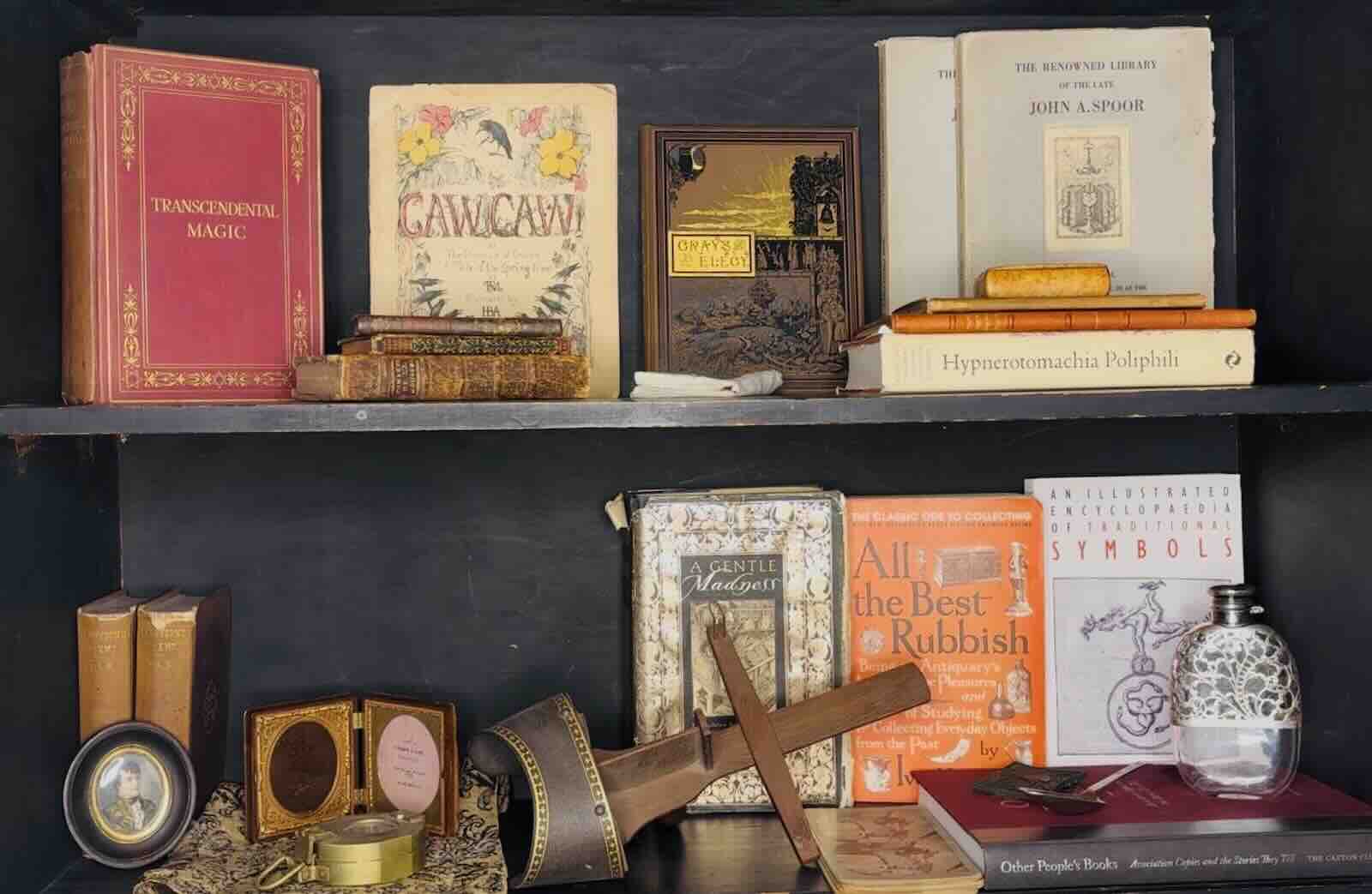
Holding a book from the early 16th century is amazing, to leaf through something that has been revered by many other people before it has reached my hands. Even though it doesn’t directly connect to my theme of death & mourning, I found it around the time that I was reading parts of Hypnerotomachia Poliphili, or the Strife of Love in a Dream by Francesco Colonna, where the main character Poliphilo wanders through the ruins of a Roman cemetery and reads the epitaphs on each gravestone, reflecting on his own morality. It gave me a glimpse into not only Roman funerary traditions but the Renaissance rediscovery of them. This book was also printed on the Aldine press, but a first edition/any Aldine edition is incredibly rare, so reading a reproduction while having another Aldine book to study from acts as a perfect replacement to the original.
How about The One that Got Away?
I’ve lost so many books and other objects at auction to higher bidders, and some regretful ones that come to mind are: a memento mori pendant from 1707 with an engraved skull in the center; an 18th century linen purse with a poem written by a young girl who lost her father in the Revolutionary war; an incredible silver mounted and bone prayer book, carved with an image of a flying angel representing the death of a child; and a one-of-a-kind bound volume of fourteen 17th century funerary sermons, compiled by a teenager in the 1850s, complete with a handwritten table of contents.
What would be the Holy Grail for your collection?
As I’ve mentioned previously, a first edition of Hypnerotomachia Poliphili would be incredible, just to be able to see the original woodcuts up close. Other “holy grails” include the dance of death by Hans Holbein, a well used book of hours, and signed first editions of The Dwindling Party and The Blue Aspic by Edward Gorey.
Aside from specific books, finding anything that belonged to the people whose books I now own would be an invaluable addition to the collection. (As well as their stories!)
Who is your favorite bookseller / bookstore?
Over the pandemic, I used to frequent STRAND and search through their miscellaneous books at the far end of the first floor, which was always exciting. Once, I found a signed copy of A Woman’s War Record by Septima Collis, 1889.
Another favorite has always been Argosy, where I’ve spent hours on the second floor, looking through maps and their sorted folders of prints (subjects including murder & funerals).
The best of all has to be The Book Cellar in New York, in between 77th and 78th street. I visit it anytime I can, since it’s so close to my High School. Everyone who volunteers there is super nice, and some of my best finds come from the Cellar. Their prices are really affordable, and their rare book cabinet is always 50% off!
Some of my favorite booksellers are people I’ve met at book fairs, such as the Manhattan Rare Book & Fine Press fair, and include Resser Thorner Americana, Thomas G. Boss Fine Books, and Patrick Olson Rare Books.
What would you collect if you didn’t collect books?
Funnily enough I collect other antique things as well, including 18th and 19th century English furniture, vintage clothing, silver spoons, and jewelry. I currently have a mid-19th century English partner’s desk ($11 auction find) that I work from, a late 18th century linen press that I got for my 16th birthday that I use to store my clothes, and an 1870s burl walnut davenport desk. I honestly love almost any kind of decorative art object.
However, if I could seriously collect one thing besides books, it would be portrait miniatures. I love the intimate nature of them, how detailed and intricate they can be, and their importance as not only decorative objects but as sole records of a person’s existence and memory. It’s amazing to see portrait miniatures with hairwork on the reverse, along with a name or two. I’ve found a few exciting ones at auction, notably a couple Ebeneezer Mack portraits, one painted by Mrs. Moses. B Russell, and a portrait of Henry Trevanion, relative of Lord Byron and amateur poet.