


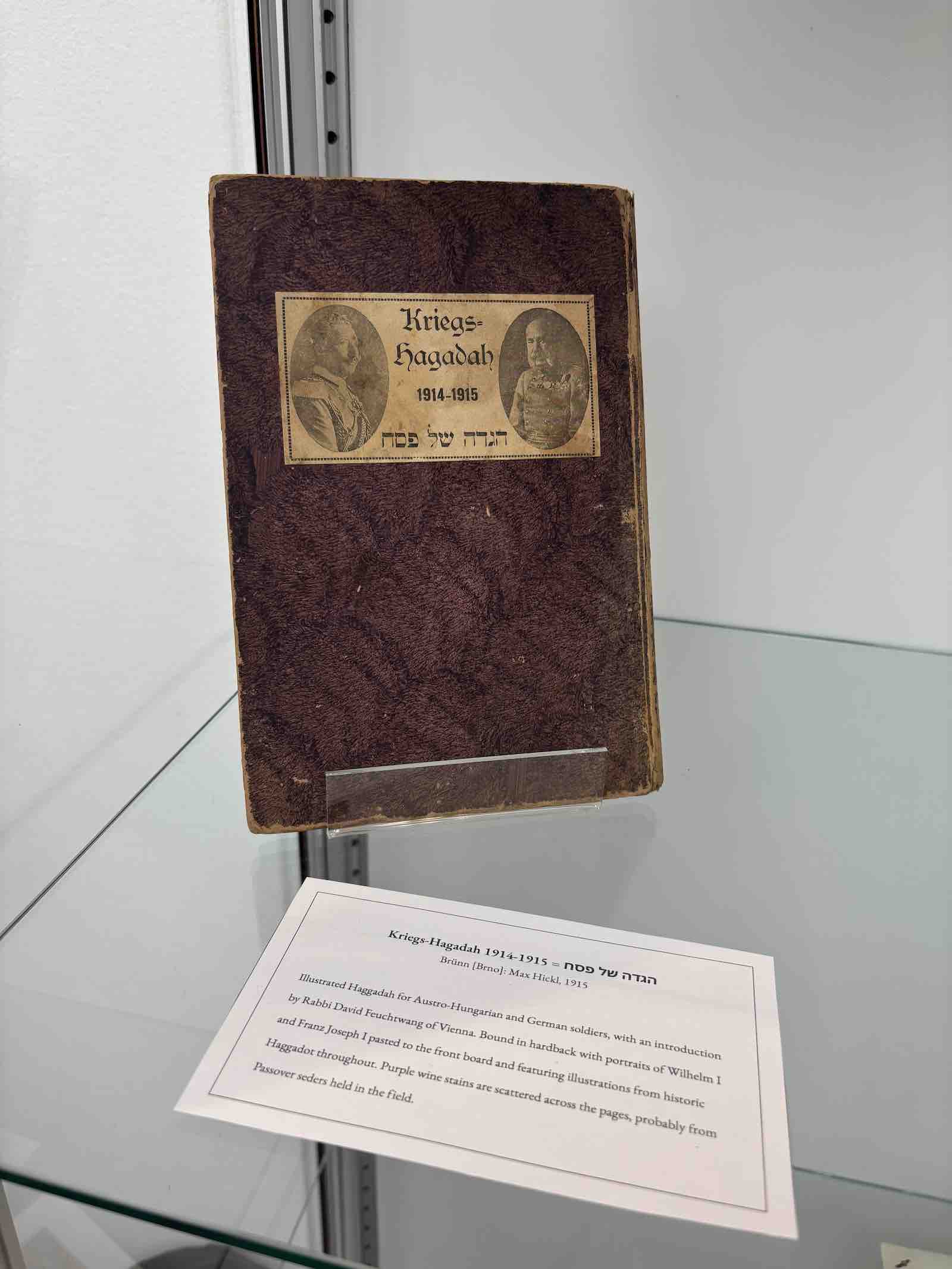
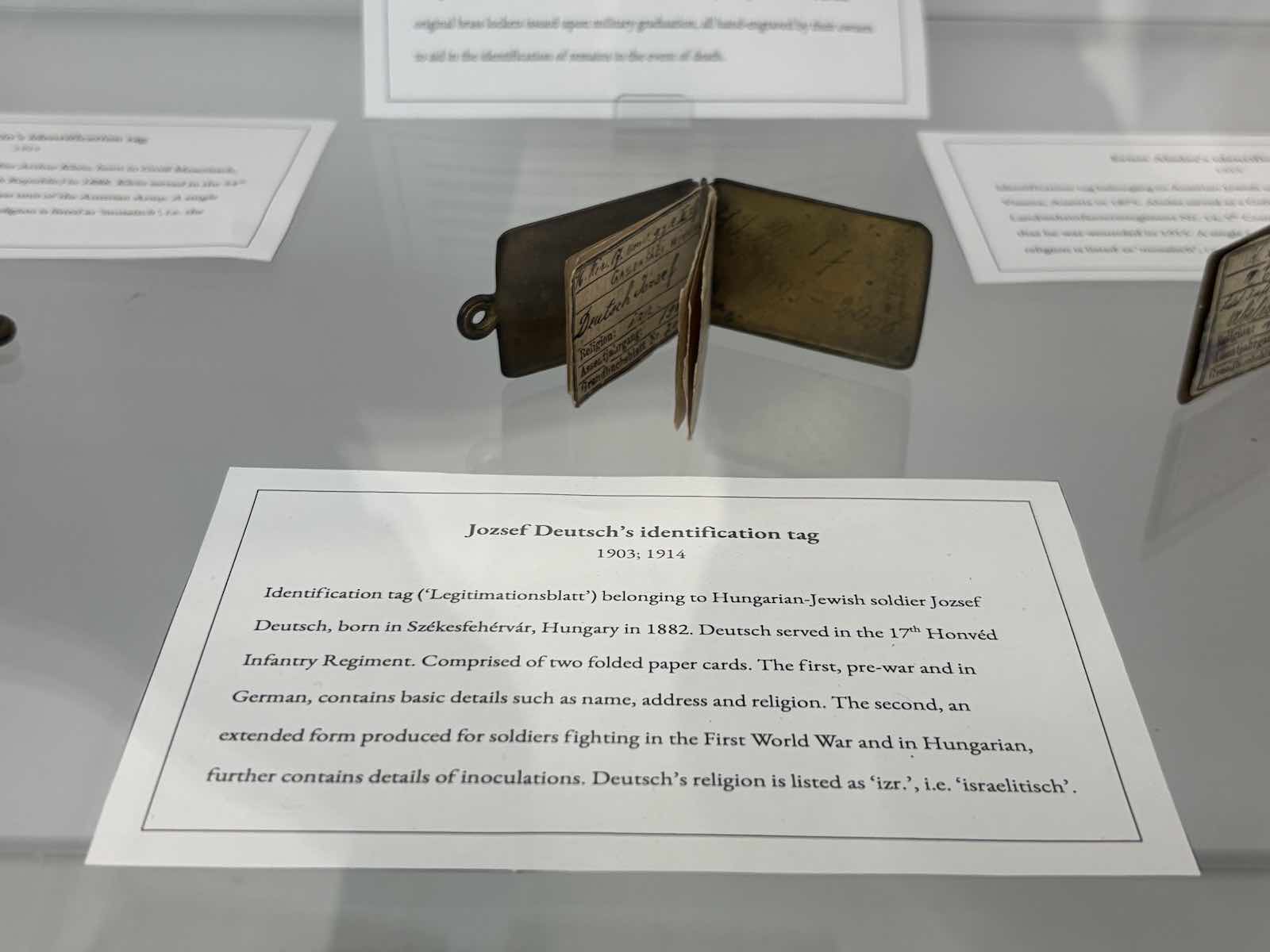
How about the most recent book?
Occasionally, I branch out into other areas of Judaica and the military. I recently purchased a Rabbinic Bible printed in Vienna which was gifted to a young Jewish conscript ('Cantonist') serving in St Petersburg in the 1850s. Cantonists faced terrific pressure to convert, and the book is a testament to one soldier's abiding faith.
And your favourite book in your collection?
Otto Brod's prayer book. Born in Prague in 1888, Brod was a member of Franz Kafka's circle of friends. His brother Max is better remembered as Kafka’s executor and the man who saved priceless literary treasures from the inferno, but Otto was a novelist and journalist in his own right. He was called up for service in 1914 and served with distinction as a Lieutenant on the Italian Front.
The book, a small Hebrew siddur containing liturgy according to the Sephardic rite, is inscribed in German: 'Received as a gift from the Field Rabbi on the occasion of the funeral service for His Royal Highness Emperor Franz Joseph I. Isonzo Front, 2.12.1916. Lt. Otto Brod'. In the end, not even Brod's heroic military service could save him from the fate that befell so many of his fellow Jews. He was deported from Theresienstadt on the final transport to Auschwitz in October 1944, where he was murdered the same day.
Best bargain you’ve found?
I acquired a large box of papers last year, 17kg in all, from an eBay seller based in Israel. It was far from my cheapest purchase and the postage accounted for a fifth of the cost, but I suspected even with the limited description and photographs that it was considerably underappreciated. Sorting through the contents over the course of three days, the box contained thousands of documents, letters, postcards, photographs and military records, all of which had belonged to an Austrian-Jewish officer serving on the Eastern Front throughout most of the war.
The correspondence, addressed to his fiancée in Vienna, describes day-to-day life in minute detail, men sleeping up to their necks in cold, muddy water, Russian retreats and advances, encounters with other Jewish soldiers. Nearly all of the letters retain their original military envelopes and stamps. There were several hundred more documents and photographs relating to the officer's Talmud Torah education in what is now Slovakia, his escape to Haifa in the 1930s and his son's service in the British Army during the Second World War, plus a signed photograph of Enrico Caruso for good measure.
It is probably the largest surviving archive of correspondence by a Jewish First World War soldier at more than 6,500 pages of handwritten text.
How about The One that Got Away?
In 2023, a pocket Haggadah for Austro-Hungarian soldiers was sold at auction in Tel Aviv. I have never seen another one, nor is there a copy in any major institutional library.
What would be the Holy Grail for your collection?
There's no single item. Rather than having a completionist outlook, I seek out anything which might complement the collection or which illustrates the life of a previous owner through an inscription or other such provenance. Even if I have five copies of the same book, each one will tell a different story. That said, I am still looking for a copy of that Haggadah.
Who is your favorite bookseller / bookstore?
The secondhand bookstalls at Baddesley Clinton where my love of book collecting began at age eight or nine.
What would you collect if you didn’t collect books?
I am an inveterate collector of anything historical. It is probably an illness at this point. My other interests lie in photographs of Jewish life in Europe before 1939, Old Master paintings and drawings, antiquities and British portraits of the 18th century. Truthfully, it seems to change by the season, but I always return to books one way or another.