Are Movie Adaptations of Pride and Prejudice Ruining the Book?
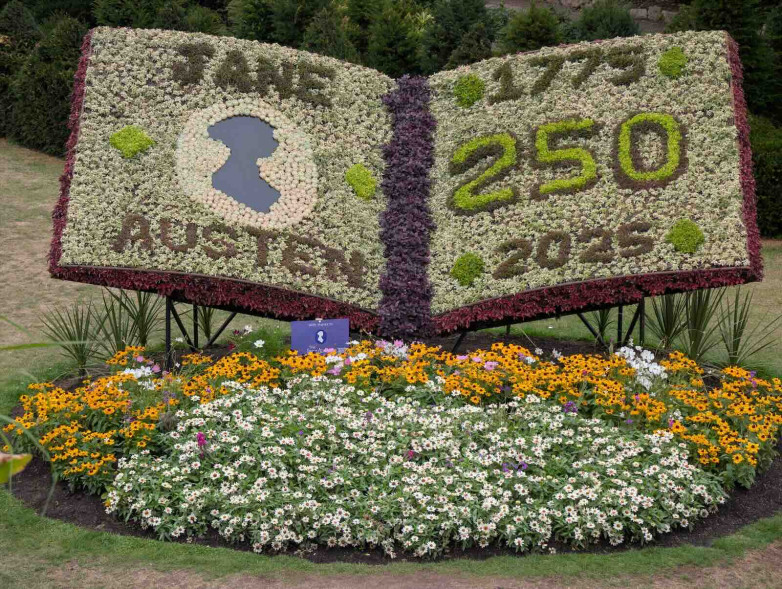
Parade Gardens, Bath, marks the 250th anniversary year of Jane Austen's birth



In the first of a two-part post to mark Jane Austen's birthday today, screenwriter Heidi Lux looks at how film-makers have treated the author's most popular work.
There are few things worth getting into an awkward and uncomfortable fight at a wedding over, and that Jane Austen wrote comedies is one of them. When someone insists point blank that Jane Austen never wrote comedies except for Emma, it’s well worth ruining someone else’s happiest day, because comments such as these should never be ignored, no matter the social setting.
The poor thing who uttered such vile slander considered herself an Austen fan. But she was young and has much to learn about the world, including the fact that the grandmother of the romantic comedy did, indeed, write comedies. But the shocking thing is that she isn’t alone in her sentiments. Both HBO Max and Hulu classify Pride and Prejudice adaptations as a drama.
How did we get here? I blame the mis-categorization of the movies for making us mis-categorize the source material in turn. The movies make Austen’s work more accessible. Watching a two-hour movie in semi-period speech is much easier than reading a full-on novel in full-period speech. But they’ve also been instrumental in removing Austen’s witty, bitchy voice from her own work. Steadily, over the course of 200 years, Austen is getting erased from the very words she put down. In death, as in life, poor Jane Austen is surrounded by people who just don’t get her.
The first time Pride and Prejudice was immortalized in cinema was the 1940s MGM adaptation, penned by Aldous Huxley. The departure from the source material is ingrained in the project since the movie was based on Helen Jerome’s stage play adaptation of the novel rather than the novel itself.
It’s made more palatable for modern (at the time) audiences. There’s a dash of Depression-era escapism and optimism (so you don’t kill yourself) mixed in with screwball comedy. Instead of setting the book so closely associated with Regency England in Regency England, it’s set in the ambiguous mid-1800s with flouncy costumes that ambiguously resemble Gone With the Wind, a huge hit the year prior.
Filmed during those awkward years when WWII either had or hadn’t started, depending on what side of the Atlantic you’re on, part of the purpose of this adaptation was to get Americans on board with helping the British.
In some ways being innocuously subversive and pro-British suits her, the film departed from her witty dialogue by shoehorning sentimental speeches about needing to have a dream. Elizabeth and Mr. Darcy call each other proud and prejudiced in a way that’s so on the nose it would make you cross-eyed if you tried to look at it.
I will restrain myself from point out that the title Pride and Prejudice is also meant to be satirical, so going on about the themes of pride and prejudice in Pride and Prejudice places too much weight on something that was probably meant as a joke (or at the very least, a self-referential nod to Sense and Sensibility). Still, at least the comedy in this adaptation was praised, comedy which seems to get lost as time goes on.
The 1995 BBC adaptation is generally considered the most faithful to the book, despite shifting the focus more towards the romance of it all by centering the action around Elizabeth and Mr. Darcy’s relationship. The six-part miniseries has more time to stretch its legs than a two-hour movie, so it’s able to hit more of the plot points. It’s also set in the same time period as the original novel, which, weirdly, is the only of the major adaptations to do so.
It feels as if director Simon Langton knew he was filming a comedy. Jane and Elizabeth share smirks, giving us, the audience, the social cue that the people around them are foolish. And that now iconic scene (you know which one) was originally intended to be played for laughs, hitting on the absurdity in a social situation.
According to screenwriter Andrew Davies, he “just thought it was a funny scene. It was about Darcy being a bloke, diving in his lake on a hot day, not having to be polite – and then he suddenly finds himself in a situation where he does have to be polite. So, you have two people having a stilted conversation and politely ignoring the fact that one of them is soaking wet. I never thought it was supposed to be a sexy scene in any way.”
But we’re all far too horny for humor, and Mr. Darcy became a walking thirst trap instead of an awkward aristocrat. This scene (not in the novel, somehow) dominates perceptions of this adaptation, setting what we remember as the tone. It’s lustful, serious, not witty, playful.
The presence of serious actor/sex symbol Colin Firth combined with the lofty (to Americans) stamp of the BBC makes us feel as if Pride and Prejudice is a Classic with a capital C.
Heidi Lux is a screenwriter and satirist based in Los Angeles. Her feature Crushed is streaming on Tubi, and her work has appeared in McSweeney's, Reductress, The Belladonna Comedy, Business Insider, Eater and more. Part II of this article will be published on this site tomorrow.