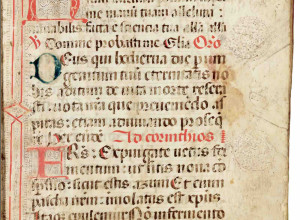




Thomas E. Donnelley, the son of the company’s founder, Richard R. Donnelley, began the series in 1903. His intent in launching the Lakeside Classics can be found in the introduction to the first book in the series, The Autobiography of Benjamin Franklin, where he wrote: “If, in a modest way this volume conveys the idea that machine-made books are not a crime against art, and that books may be plain but good, and good though not costly, its mission has been accomplished.” Doug Fitzgerald, executive vice president of communications for R. R. Donnelley, put it like this: “The Classics were begun as a means of demonstrating that books produced with the latest techniques are no affront to art and craftsmanship, and they can be beautiful and enduring. For more than a century, R. R. Donnelley employees have brought that premise to life through the Lakeside Classics and in the titles that we produce for our customers.”
At first the series specialized in speeches and writings of noted Americans. In 1911, however, the publication of The Autobiography of Gurdon Saltonstall Hubbard changed the series’ focus. “Since 1911, the Lakeside Classics volumes have been public domain, first-person narratives of American history,” explained Fitzgerald. Throughout the 1980s, Fitzgerald continued, volumes emphasized history on the North American continent, including the Civil War, the American Old West, early exploration, and everyday frontier life. As R. R. Donnelley expanded internationally, however, more recent texts illustrate the American experience beyond the country’s borders. At present, Fitzgerald said, the company has locations in fourteen different time zones around the world. Titles chosen for the Lakeside Classics series now reflect the company’s new global footprint—for example, 2004’s The Interesting Narrative of the Life of Olaudah Equiano, or Gustavus Vassa, The African.