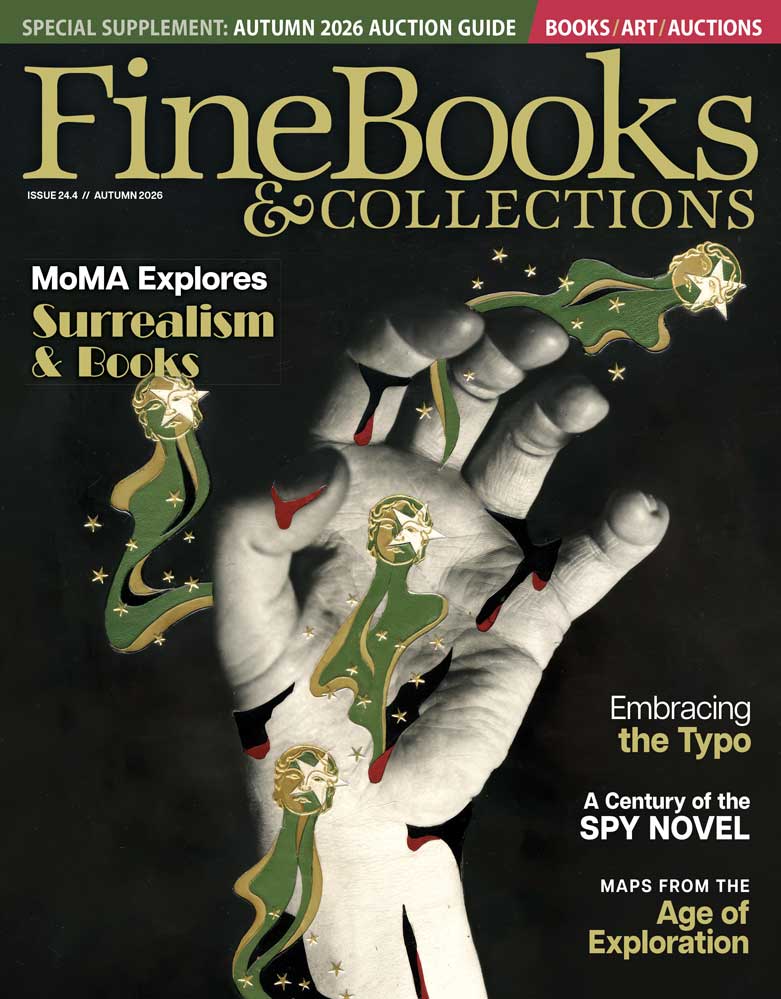
Bookseller Sky Duthie on Younger Book Collectors and Book-Adjacent Objects
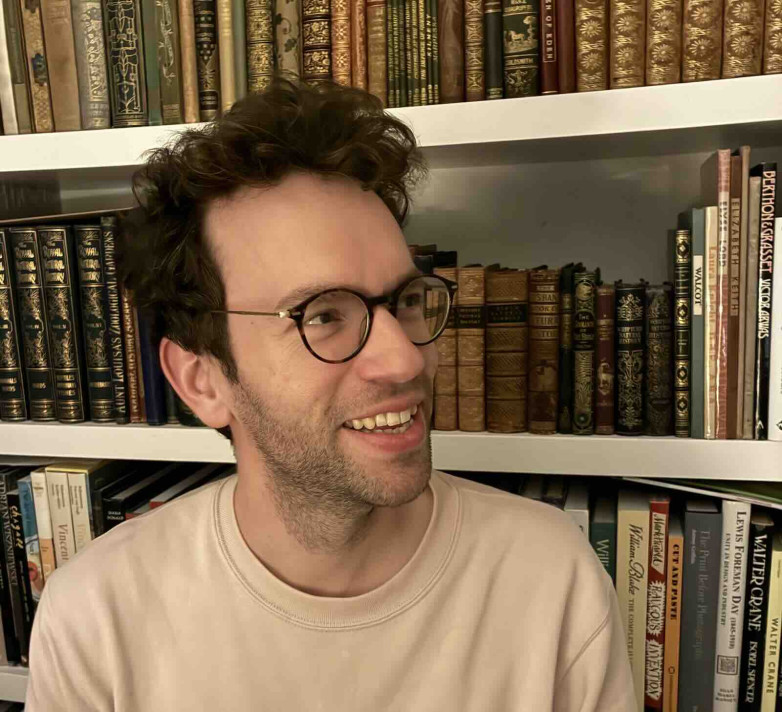
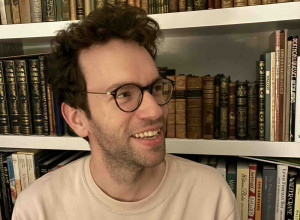
Sky Duthie



Our Bright Young Booksellers series continues today with Sky Duthie, proprietor of Sky Duthie Rare Books based in York, England:
How did you get started in rare books?
I’ve collected all manner of things as long as I can remember and also grew up with a parent who dealt in the decorative arts, spending my childhood trailing around everything from jumble sales to the London auction rooms, so the world of collecting and dealing has always been on my radar. I began collecting books as a teenager, mostly relating to golden age illustration and eighteenth- and nineteenth-century popular natural history.
After a history PhD, I entered the trade working for Lucius Books in York, where I became immersed in the rare book world. At Lucius, I was introduced to every element of bookselling, from packing orders, dealing with shop customers, and combing auctions, to exhibiting at the major US fairs and going on buying trips to Europe. I realise now how immensely fortunate I was to be given the opportunity to learn the trade as an ‘all-round’ bookseller, under the guidance of someone who had built their own successful business from the ground up.
When did you open Sky Duthie Rare Books and what do you specialize in?
I set up my own business in 2022, shortly after the birth of our first child. I specialise in the unusual and the visual, combining rare books with manuscript material, original artwork, and ‘book-adjacent objects’ (a term that I love, and which can encompass anything I wish, as long as it has a bookish enough vibe). My broad areas of focus include art and design, illustration, illumination, prints and printmaking, fine bindings, travel and exploration, natural history;,and early works created by or for children. I particularly enjoy acquiring unique, eye-catching items that can draw people into a stand or a catalogue, where they can then discover other things too.
What do you love about the book trade?
It’s an extremely collegiate and affable profession full of a diversity of people with great knowledge and care for what they do. There’s also a slightly anarchic tinge to it – a pride in independence, non-conformity, an acceptance of eccentricity, and a discreetly radical embrace of doing something for the love of it, which is fun yet also culturally meaningful, in an age which often militates against such things. Plus, it’s simply a great privilege to be able to indulge and develop my own interests on a daily basis – it’s both thrilling and enriching to always be discovering and learning new things.
Describe a typical day for you:
Most mornings I wake early (generally not by choice!) and then, after taking the children to nursery/school, I hopefully arrive at my desk by 9.30am with a strong coffee. My day is then spent variously cataloguing, researching, photographing, packing orders, and dealing with the general admin of running a business. The best part, though, is the treasure-hunting – auctions, fairs, shops, and various other excursions – scattered across each week.
Favorite rare book (or ephemera) that you’ve handled?
I’ve currently got an early eighteenth-century micrographic calligram, which I think is just incredible. It’s a large devotional image of St. Francis surrounded by angels and other allegorical figures executed in coloured inks on vellum, the image being entirely composed of miniscule text (Psalms), barely perceptible to the naked eye. It would have been painstakingly painted with something akin to a single hair on the end of a brush. It’s a breathtaking feat of dedication and skill.
What makes a great collector?
A love and knowledge of the subject, a good eye, and patience.
What do you personally collect?
Far too many things! Late nineteenth/early twentieth-century illustration (especially original artwork) and popular natural history remain interests. I also have an eclectic collection of art and studio ceramics. My strongest interest, though, is in the Arts and Crafts Movement – its ethos and diverse creativity, particularly the work of lesser known (or unknown) artists and craftspeople.
What are your interests outside of work?
My personal interests are largely bound-up in my work – art, design, literature, history, curating and collecting – which is part of what makes it such a great job! Most of my spare time is taken up with my two young children, so things that I can do with them are mostly what occupy me outside of work at the moment – gardening, cooking, running around in the woods, that sort of thing!
What changes in the rare book trade most excite — or concern — you?
There’s been an increase in the number of younger people coming into the trade, with a better gender-balance also beginning to emerge, which is great news for all of us, bringing with it fresh perspectives. A growing appreciation of the essential humanity of the physical book (its solidity, endurance, beauty) in an often-alienating digital age has, I think, also played a role in the increasing number of younger collectors now emerging.
I’m on the judging panel of the ABA National Book Collecting Prize (open to collectors aged between 18-35), and it’s so interesting to see the new angles, subject areas, and different ways of collecting that younger people are pioneering. Many of their libraries are formed with great purpose – often seeking to illuminate a life, a story, a history, or a cause, often previously overlooked. There’s certainly still a strong appetite for more ‘traditional’ collections as well though, based around a particular author, illustrator or subject, which is great too.
Perhaps I’m naïve, but I don’t really have any major concerns – I think that the trade is in a good place right now. I feel that the various forms of instability in our world – authoritarianism and AI-pushing billionaires chief amongst them – are increasingly reminding people of the immense importance and value of tangible, uncontrollable human culture – of the freedom and essential democracy embodied within our shared capacity to create, appreciate, communicate, and learn from literature and art in its physical form, whether it be serious or ostensibly frivolous. In this regard, a Gutenberg Bible and a contemporary zine have more in common than a first glance might suggest.
Any upcoming fairs or catalogs?
I’ve just exhibited at the York Book Fair (held each September), which is the largest antiquarian bookfair in the UK and just around the corner for me; there’s such a diversity of material on display, so it’s always a pleasure. I’m missing the Chelsea fair this year, which falls on Halloween, in order to go trick-or-treating with my daughter, but will be there in 2027. Instead, I’ll be kicking off the new fair season with York again in January, followed by Harrogate and Edinburgh in March, and then Firsts at London’s Saatchi Gallery in May.
I’ll be issuing two more lists this year: an autumn miscellany predominantly focussing on history, politics and economics, and a Christmas list of art, illustration and literature.