Francis Bacon’s Sylva Sylvarum Stars in New Art and Science Exhibit
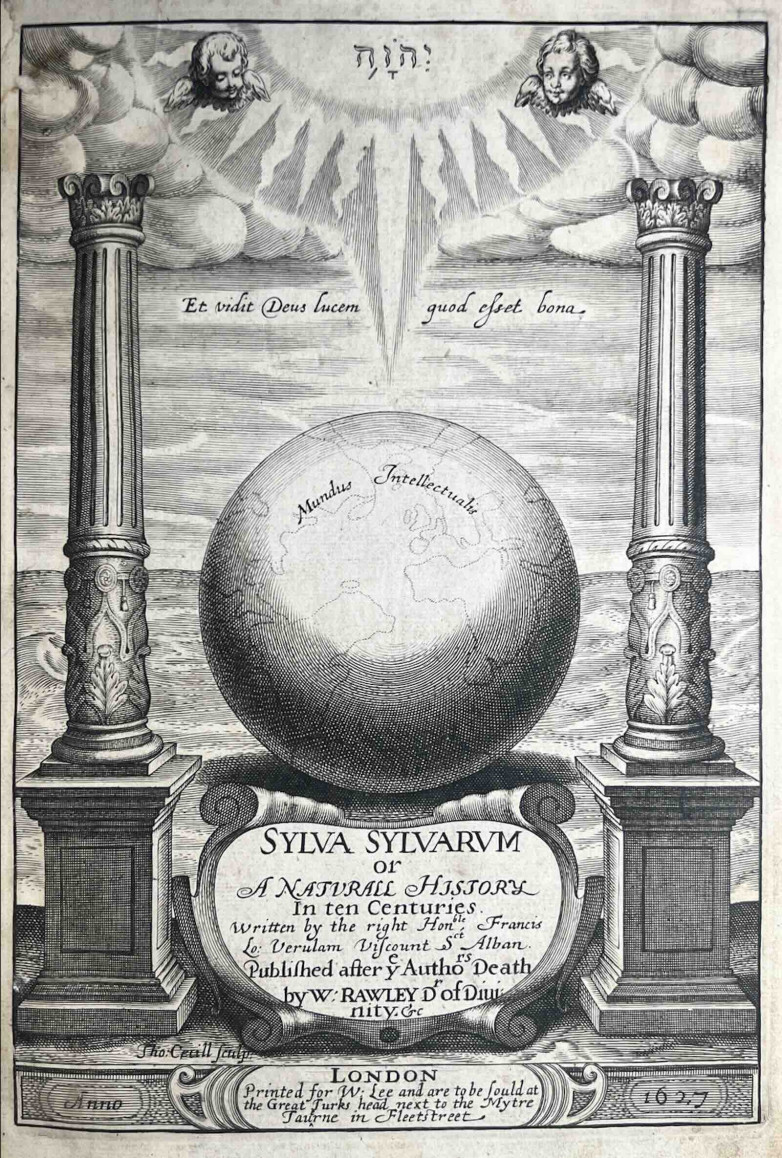
Frontispiece to Francis Bacon’s Sylva Sylvarum



Opening next month at the Bodleian Libraries in Oxford, Plain Things Wonders marks 400 years since the publication of Francis Bacon’s influential experimental science text Sylva Sylvarum.
Sylva Sylvarum turned natural history away from curiosities and marvellous beasts in favour of the wonder of ordinary things. In his introduction to Sylva Sylvarum, William Rawley wrote that Bacon’s ambition was “to make wonders plain, and not plain things wonders”. Bacon did so by inviting his readers to be curious about the most ordinary of things such as how breath evaporates from a window pane and what happens to fruit left out in hot weather.
Plain Things Wonders , which runs November 5 through August 29, 2027, examines the legacy of Bacon’s turn to the everyday, tracing how close attention to the natural world has shaped scientific discovery, natural illustration, and artists’ books over the centuries.
One of the exhibition’s major highlights will be the manuscript of Gilbert White’s The Natural History and Antiquities of Selborne (1789), a foundational text of ecology. White’s book documents the environment and local heritage of the parish of Selborne in Hampshire, England, with groundbreaking detail to establish a precedent for sustained localised observation of the natural world. This will mark the first time that the manuscript has been lent by the Gilbert White House and Gardens at The Wakes, Selborne.
It will also feature etchings and drawings produced by Anna and Susanna Lister who captured the beauty of snails and shells through detailed illustrations copied from live specimens and collections belonging to their father, the naturalist Dr Martin Lister. The sisters created more than 1,000 illustrations for their father’s pioneering book Historiae Conchyliorum (1685 – 1692), a study of shells and molluscs that helped to establish a new standard for scientific art. On display too will be a first edition of Robert Hooke’s Micrographia (1665), the first book to include illustrations of insects and plants as seen through a microscope.
A dedicated display will document the history of popular science books for children, exploring how they translated complicated scientific concepts for young minds, including the artwork and examples of the Ladybird series ‘What to Look For…’, inspiring generations of young people to take a closer look at the world around them.
There will also be a focus on the long history of observation of temperature, weather, and seasonal change, especially in Oxford, from a 14th century manuscript recording the weather month-by-month, through the 17th century invention of graph paper by Martin Lister to record barometric pressure, to the continuous records of the Radcliffe Observatory from the early 19th century to the present day.