Bullish on Libraries



By pure coincidence, it has been my good fortune to participate in the re-dedication of two libraries recently, the Cushing Memorial Library at Texas A&M in March--which I wrote about in this space a couple of weeks ago, and which will be the subject of my next Fine Books & Collections column--and the Morris Library at Southern Illinois University (SIU) in Carbondale, Ill. just last week. Especially heartening in both instances is the fact that each institution has made clear an unequivocal belief that books as we know them still matter a great deal, and that the library remains the center and soul of their universities.
At SIU, the commitment involved the appropriation of $56 million five years ago to take a building that had been built in the 1950s and make it suitable for use in the twenty-first century, quite a courageous stand for a publicly supported institution to make at a time when so many others feel that computers are the only way to go. The 235,000-square-foot structure is the central repository for the university's three million volumes--SIU is an Association of Research Libraries (ARL) member--and maintains an extensive battery of terminals and laptop connections to satisfy all electronic needs. Fully accessible to the 25,000 enrolled students, the library also serves the general public, giving the taxpayers a mighty bang for their buck.
An attractive building located at the virtual crossroads of the campus, the Morris Library has been newly fitted with common rooms that make it particularly inviting as a gathering place; there is a coffee and food gallery, of course, but also eleven nicely appointed group study areas that are ideal for reading and contemplation. During a walking tour provided by Dean of Libraries David Carlson, I was especially taken by what he called the "time out" room--a soundproofed cubicle where students can take a break from tedious routines without annoying others.
Carbondale is in the extreme southern section of the state, just 96 miles from St. Louis, 330 miles from Chicago. To be expected, special collections are strong in the history of the Middle Mississippi Valley, but there are outstanding holdings too in American philosophy, twentieth-century world literature, British and American expatriate writers of the 1920s, the Irish Literary Renaissance, and freedom of the press and censorship issues. Rare Books Librarian Melissa Hubbard provided a nice introduction to some of her favorite items, including a Kelmscott Chaucer, several of the nine first-edition copies the library has of James Joyce's "Ulysses," and a few incunables that any curator would be pleased to have in the vault.
In anticipation of my visit to SIU, Gordon Pruett, editor of Cornerstone, a quarterly publication of the Morris Library, did a lengthy Q&A with me that was published in the current edition of the magazine on pages 4-5 and 11; click here for a PDF.
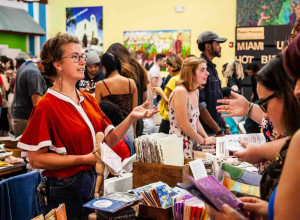
All in all, it was a very busy trip, but there was still time for a whirlwind visit to the local second-hand/antiquarian book store, a terrific place called The Bookworm, conveniently located at the Eastgate Shopping Center on East Walnut Street, owned and operated by Carl and Kelly Rexroad. I found three books from their stock of 50,000 volumes that added to the weight of my suitcase, and thank them for the terrific job they did to make for such a successful signing following my public talk.
At SIU, the commitment involved the appropriation of $56 million five years ago to take a building that had been built in the 1950s and make it suitable for use in the twenty-first century, quite a courageous stand for a publicly supported institution to make at a time when so many others feel that computers are the only way to go. The 235,000-square-foot structure is the central repository for the university's three million volumes--SIU is an Association of Research Libraries (ARL) member--and maintains an extensive battery of terminals and laptop connections to satisfy all electronic needs. Fully accessible to the 25,000 enrolled students, the library also serves the general public, giving the taxpayers a mighty bang for their buck.
An attractive building located at the virtual crossroads of the campus, the Morris Library has been newly fitted with common rooms that make it particularly inviting as a gathering place; there is a coffee and food gallery, of course, but also eleven nicely appointed group study areas that are ideal for reading and contemplation. During a walking tour provided by Dean of Libraries David Carlson, I was especially taken by what he called the "time out" room--a soundproofed cubicle where students can take a break from tedious routines without annoying others.
Carbondale is in the extreme southern section of the state, just 96 miles from St. Louis, 330 miles from Chicago. To be expected, special collections are strong in the history of the Middle Mississippi Valley, but there are outstanding holdings too in American philosophy, twentieth-century world literature, British and American expatriate writers of the 1920s, the Irish Literary Renaissance, and freedom of the press and censorship issues. Rare Books Librarian Melissa Hubbard provided a nice introduction to some of her favorite items, including a Kelmscott Chaucer, several of the nine first-edition copies the library has of James Joyce's "Ulysses," and a few incunables that any curator would be pleased to have in the vault.
In anticipation of my visit to SIU, Gordon Pruett, editor of Cornerstone, a quarterly publication of the Morris Library, did a lengthy Q&A with me that was published in the current edition of the magazine on pages 4-5 and 11; click here for a PDF.
All in all, it was a very busy trip, but there was still time for a whirlwind visit to the local second-hand/antiquarian book store, a terrific place called The Bookworm, conveniently located at the Eastgate Shopping Center on East Walnut Street, owned and operated by Carl and Kelly Rexroad. I found three books from their stock of 50,000 volumes that added to the weight of my suitcase, and thank them for the terrific job they did to make for such a successful signing following my public talk.